First editions of all five of Dickens’ Christmas books. Uniformly bound in striking full crimson morocco by George Bayntun (early twentieth century; stamped “Bayntun, Bath, England” on the turn-ins), with gilt holly leaf motifs, lettering, fillet borders, dentelles, and edges. The original cloth covers are bound in at the rear. The first two were published by Chapman & Hall; the last three by Bradbury & Evans.
All five are first impressions, but with mixed issue points. Edition and condition details provided below in separate sections.
Edition Details
A Christmas Carol. First impression, with the title page dated 1843, printed in blue and red (but faded; see condition section), and no edition statement. The textual errors remain uncorrected, which distinguishes the first impression from all later impressions (collated by hand against all entries in Smith II:4). Period faint after "gloom" on p. 21, noted by Smith in a minority of first editions. Second issue of the chapter headings, with the numbers spelled out (“Stave One”). Second state of the original cloth cover: the “D” in “Dickens” lacks the upper serif and the closest gap between the wreath and blindstamping is 12-13 mm. With a hand-colored frontispiece and three additional plates by Leech, and in-text wood-engravings by Linton after Leech. Smith II:4; Todd (1967).
The Chimes. First impression, with the title page post-dated 1845 (but printed 1844), and no edition statement. Second state of the title vignette (publisher imprint centered and at the foot). With an etched frontispiece and vignette by Daniel Maclise; additional plates and wood-engravings after Doyle, Leech, and Stanfield. Smith II:5.
The Cricket on the Hearth. First impression, with the title page post-dated 1846 (but printed 1845), and no edition statement. Second state of the Oliver Twist ad leaf (“New Edition”). With a half-title, an etched frontispiece and vignette by F. P. Becker after Maclise; in-text illustrations after Doyle, Leech, and others. Smith II:6.
The Battle of Life. First impression, with the title page dated 1846. Fourth state of the vignette title (Cupid with “A Love Story” banner and no publisher imprint underneath). With an etched frontispiece and vignette by Daniel Maclise; wood-engravings after Doyle, Leech, and Stanfield. Smith II:8.
The Haunted Man. First impression, with the title page dated 1848 and no edition statement. First (and only) state of the vignette titles. With an etched frontispiece and vignette by Martin & Corbould after Tenniel; in-text illustrations after Leech, Stanfield, Tenniel, and Stone. Smith II:9.
Condition Details
Small octavos (approximately 6.5 x 4.25 inches). Bindings tight, leather boards supple, gilt bright overall with minor losses to edges and gilt fillet borders on the front and rear boards. A few minor, isolated darker spots, rubbing, and shallow surface indentations from handling. No bookplates, underlining, or prior owner markings. Contents largely clean, with only an occasional light stain or age spot. All volumes retain their original cloth covers and spines, bound in at the rear.
Some leaves show signs of gentle cleaning, most noticeably the title page of A Christmas Carol (resulting in fading, especially of the blue ink), and very subtly to the vignette titles of other volumes without discernable fading. Likely this was done by Bayntun himself at the time of rebinding, as similar treatment has been observed in his other bindings (including another copy of A Christmas Carol) and was standard practice of the era (see Zaehnsdorf 1890; Cockerell 1901).
A Christmas Carol shows a small dent to the fore-edge of the text block, a marginal chip to the illustration page of the Ghost of Christmas Present, and a discreetly mended tear to the margin of that same leaf (neither flaw affects the image, as shown). All four plate leaves are lightly tanned. Bound without the terminal ad leaf, as common (else complete). In the other four volumes, the ad leaves are present, and the illustration plates are all complete, intact, and undamaged. The title vignettes of The Haunted Man are noticeably darkened and stained, mainly on the edges.
Additional pictures available upon request. A finely preserved and visually striking set.
Binder Note
The turn-ins are gilt-stamped “Bayntun, Bath, England,” confirming the work predates the firm’s 1939 acquisition of Riviere. The Bayntun-Riviere bindery remains one of the most celebrated of the twentieth century, known for its technical precision and visual elegance, and continues to operate under the same name today.
Background
“I will honour Christmas in my heart, and try to keep it all the year.” — A Christmas Carol, Stave IV
In 1843, desperate for income and determined to make a moral statement, Charles Dickens wrote A Christmas Carol in six weeks and paid for its production himself. He rejected cheap formats, insisting on gilt-edged pages, hand-colored illustrations, and cloth boards stamped in gold. Although the first impression sold out within days, high production costs and disputes over profits left him with little return. Each of the Christmas books that followed carried the same intent: to unite moral purpose with visual warmth and seasonal charm. Dickens wanted his Christmas books to be beautiful. This set, rebound by Bayntun in full crimson morocco, honors the beauty he demanded at personal and financial risk.
Reference List
Smith, W. E. (1983). Charles Dickens in the original cloth: A bibliographical catalogue of the first appearance of his writings in book form in England with photographs of the bindings, titlepages, and other relevant data. Part Two: The Christmas books and selected secondary works. Heritage Book Shop.
Todd, W. B. (1961). Note 170. Dickens’s Christmas Carol. The Book Collector, 10(Winter), 449–454.
Zaehnsdorf, J. W. (1890). The art of bookbinding: A practical treatise for amateurs (2nd ed.). Sampson Low, Marston & Co.
Cockerell, D. (1901). Bookbinding, and the care of books. Macmillan & Co.
Inventory ID: 319 - 970 - 175
First editions of all five of Dickens’ Christmas books. Uniformly bound in striking full crimson morocco by George Bayntun (early twentieth century; stamped “Bayntun, Bath, England” on the turn-ins), with gilt holly leaf motifs, lettering, fillet borders, dentelles, and edges. The original cloth covers are bound in at the rear. The first two were published by Chapman & Hall; the last three by Bradbury & Evans.
All five are first impressions, but with mixed issue points. Edition and condition details provided below in separate sections.
Edition Details
A Christmas Carol. First impression, with the title page dated 1843, printed in blue and red (but faded; see condition section), and no edition statement. The textual errors remain uncorrected, which distinguishes the first impression from all later impressions (collated by hand against all entries in Smith II:4). Period faint after "gloom" on p. 21, noted by Smith in a minority of first editions. Second issue of the chapter headings, with the numbers spelled out (“Stave One”). Second state of the original cloth cover: the “D” in “Dickens” lacks the upper serif and the closest gap between the wreath and blindstamping is 12-13 mm. With a hand-colored frontispiece and three additional plates by Leech, and in-text wood-engravings by Linton after Leech. Smith II:4; Todd (1967).
The Chimes. First impression, with the title page post-dated 1845 (but printed 1844), and no edition statement. Second state of the title vignette (publisher imprint centered and at the foot). With an etched frontispiece and vignette by Daniel Maclise; additional plates and wood-engravings after Doyle, Leech, and Stanfield. Smith II:5.
The Cricket on the Hearth. First impression, with the title page post-dated 1846 (but printed 1845), and no edition statement. Second state of the Oliver Twist ad leaf (“New Edition”). With a half-title, an etched frontispiece and vignette by F. P. Becker after Maclise; in-text illustrations after Doyle, Leech, and others. Smith II:6.
The Battle of Life. First impression, with the title page dated 1846. Fourth state of the vignette title (Cupid with “A Love Story” banner and no publisher imprint underneath). With an etched frontispiece and vignette by Daniel Maclise; wood-engravings after Doyle, Leech, and Stanfield. Smith II:8.
The Haunted Man. First impression, with the title page dated 1848 and no edition statement. First (and only) state of the vignette titles. With an etched frontispiece and vignette by Martin & Corbould after Tenniel; in-text illustrations after Leech, Stanfield, Tenniel, and Stone. Smith II:9.
Condition Details
Small octavos (approximately 6.5 x 4.25 inches). Bindings tight, leather boards supple, gilt bright overall with minor losses to edges and gilt fillet borders on the front and rear boards. A few minor, isolated darker spots, rubbing, and shallow surface indentations from handling. No bookplates, underlining, or prior owner markings. Contents largely clean, with only an occasional light stain or age spot. All volumes retain their original cloth covers and spines, bound in at the rear.
Some leaves show signs of gentle cleaning, most noticeably the title page of A Christmas Carol (resulting in fading, especially of the blue ink), and very subtly to the vignette titles of other volumes without discernable fading. Likely this was done by Bayntun himself at the time of rebinding, as similar treatment has been observed in his other bindings (including another copy of A Christmas Carol) and was standard practice of the era (see Zaehnsdorf 1890; Cockerell 1901).
A Christmas Carol shows a small dent to the fore-edge of the text block, a marginal chip to the illustration page of the Ghost of Christmas Present, and a discreetly mended tear to the margin of that same leaf (neither flaw affects the image, as shown). All four plate leaves are lightly tanned. Bound without the terminal ad leaf, as common (else complete). In the other four volumes, the ad leaves are present, and the illustration plates are all complete, intact, and undamaged. The title vignettes of The Haunted Man are noticeably darkened and stained, mainly on the edges.
Additional pictures available upon request. A finely preserved and visually striking set.
Binder Note
The turn-ins are gilt-stamped “Bayntun, Bath, England,” confirming the work predates the firm’s 1939 acquisition of Riviere. The Bayntun-Riviere bindery remains one of the most celebrated of the twentieth century, known for its technical precision and visual elegance, and continues to operate under the same name today.
Background
“I will honour Christmas in my heart, and try to keep it all the year.” — A Christmas Carol, Stave IV
In 1843, desperate for income and determined to make a moral statement, Charles Dickens wrote A Christmas Carol in six weeks and paid for its production himself. He rejected cheap formats, insisting on gilt-edged pages, hand-colored illustrations, and cloth boards stamped in gold. Although the first impression sold out within days, high production costs and disputes over profits left him with little return. Each of the Christmas books that followed carried the same intent: to unite moral purpose with visual warmth and seasonal charm. Dickens wanted his Christmas books to be beautiful. This set, rebound by Bayntun in full crimson morocco, honors the beauty he demanded at personal and financial risk.
Reference List
Smith, W. E. (1983). Charles Dickens in the original cloth: A bibliographical catalogue of the first appearance of his writings in book form in England with photographs of the bindings, titlepages, and other relevant data. Part Two: The Christmas books and selected secondary works. Heritage Book Shop.
Todd, W. B. (1961). Note 170. Dickens’s Christmas Carol. The Book Collector, 10(Winter), 449–454.
Zaehnsdorf, J. W. (1890). The art of bookbinding: A practical treatise for amateurs (2nd ed.). Sampson Low, Marston & Co.
Cockerell, D. (1901). Bookbinding, and the care of books. Macmillan & Co.
Inventory ID: 319 - 970 - 175

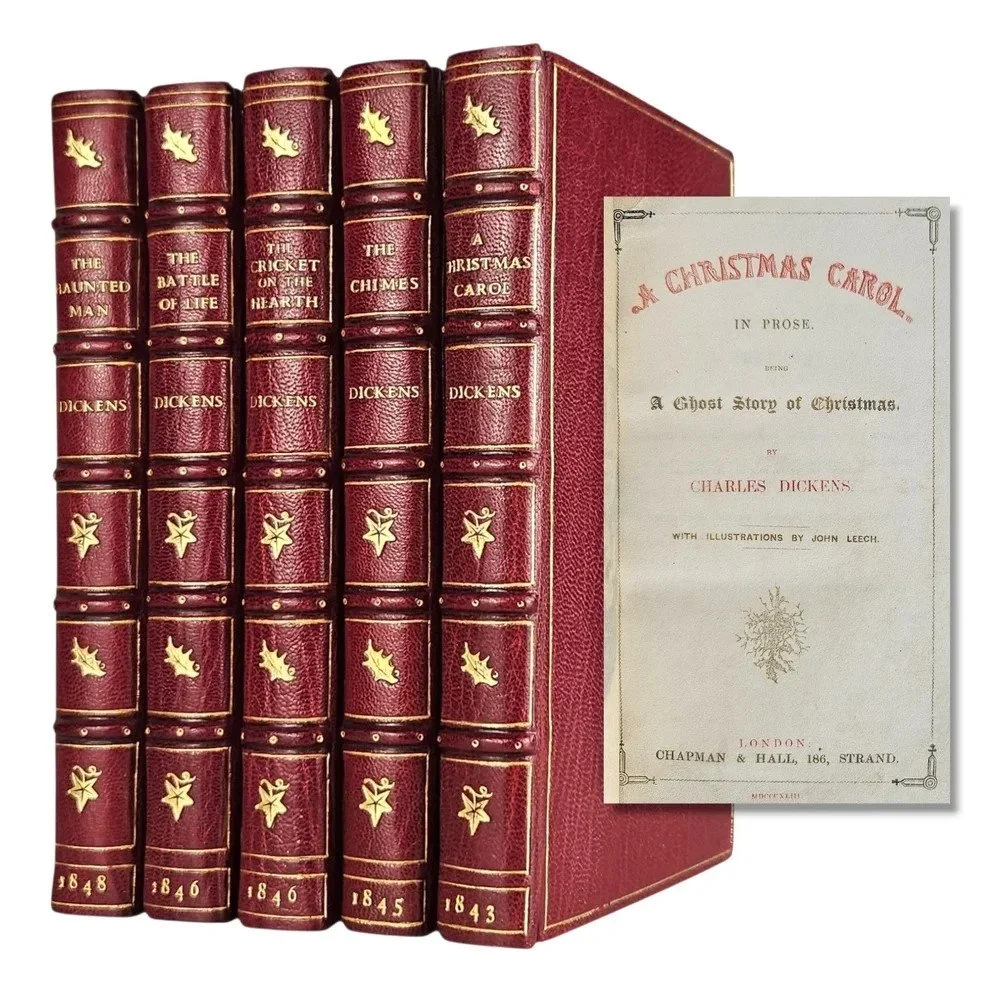 Image 1 of 24
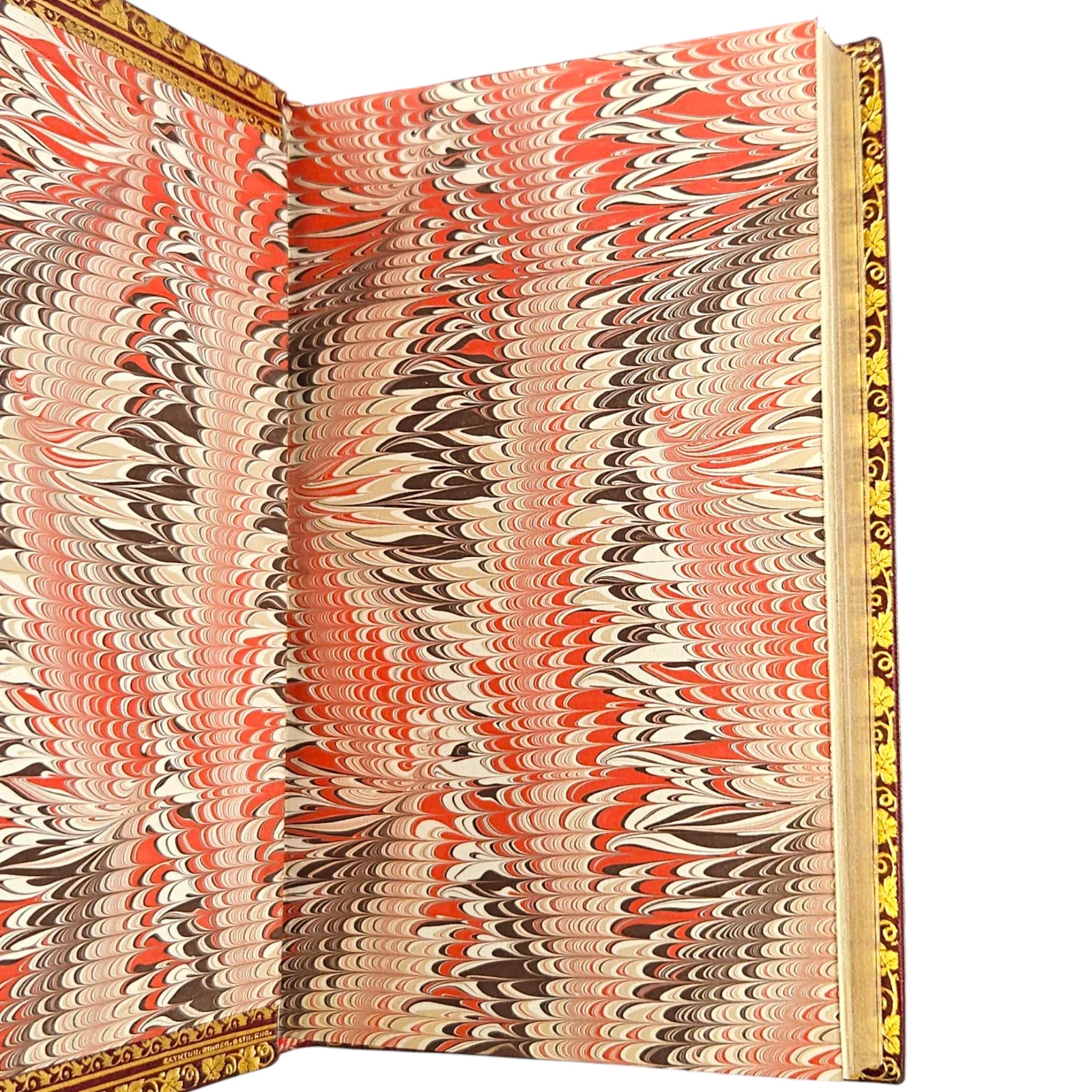 Image 2 of 24
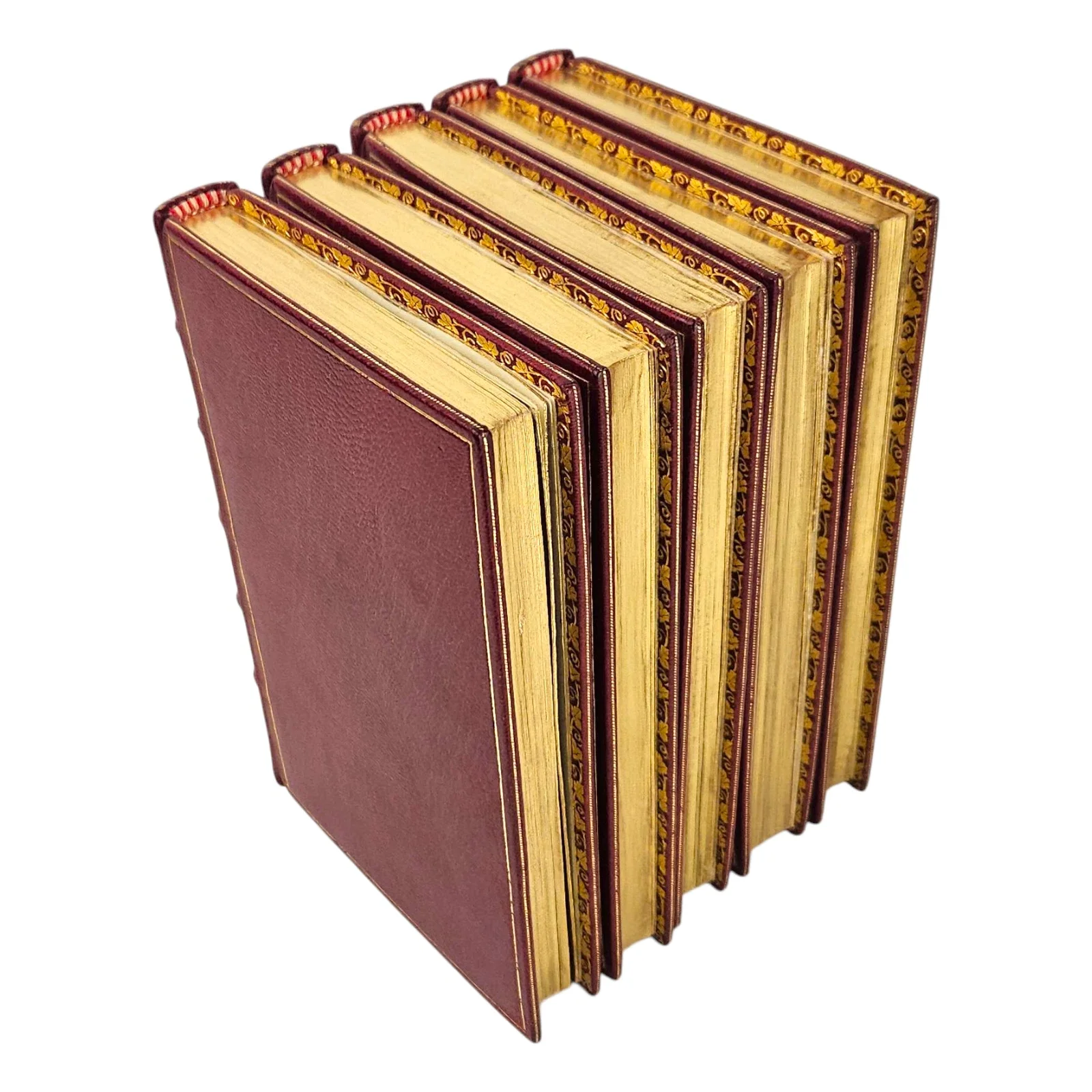 Image 3 of 24
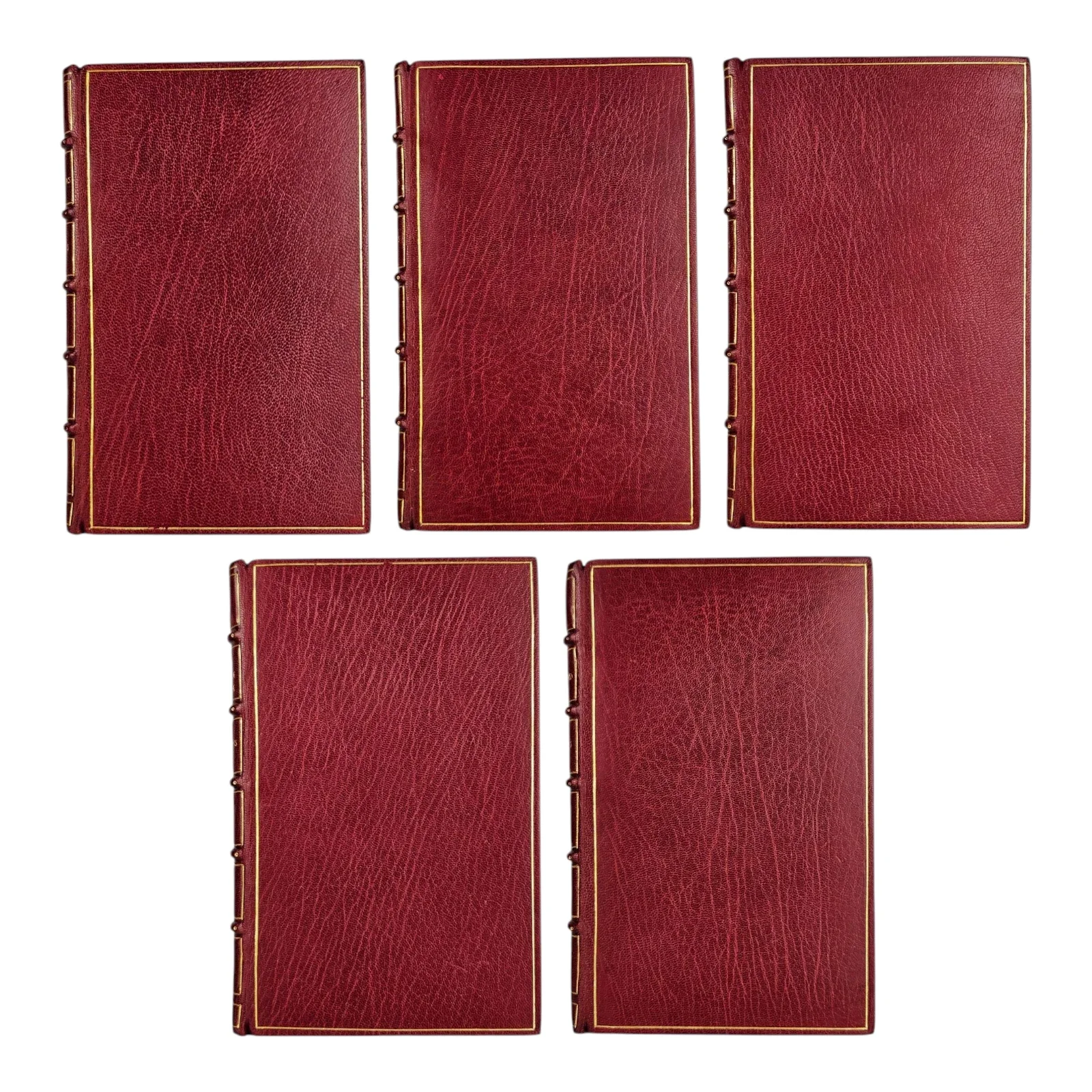 Image 4 of 24
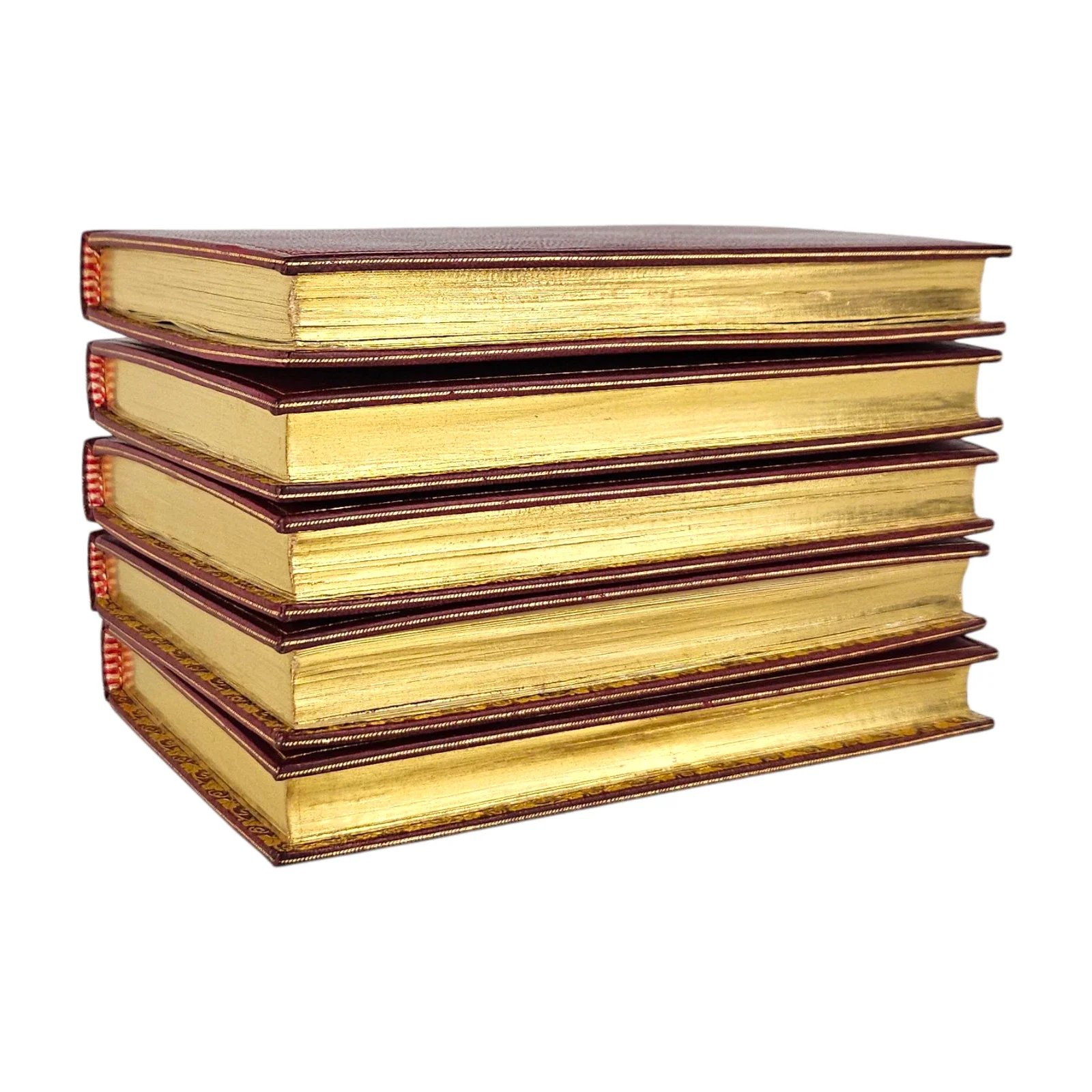 Image 5 of 24
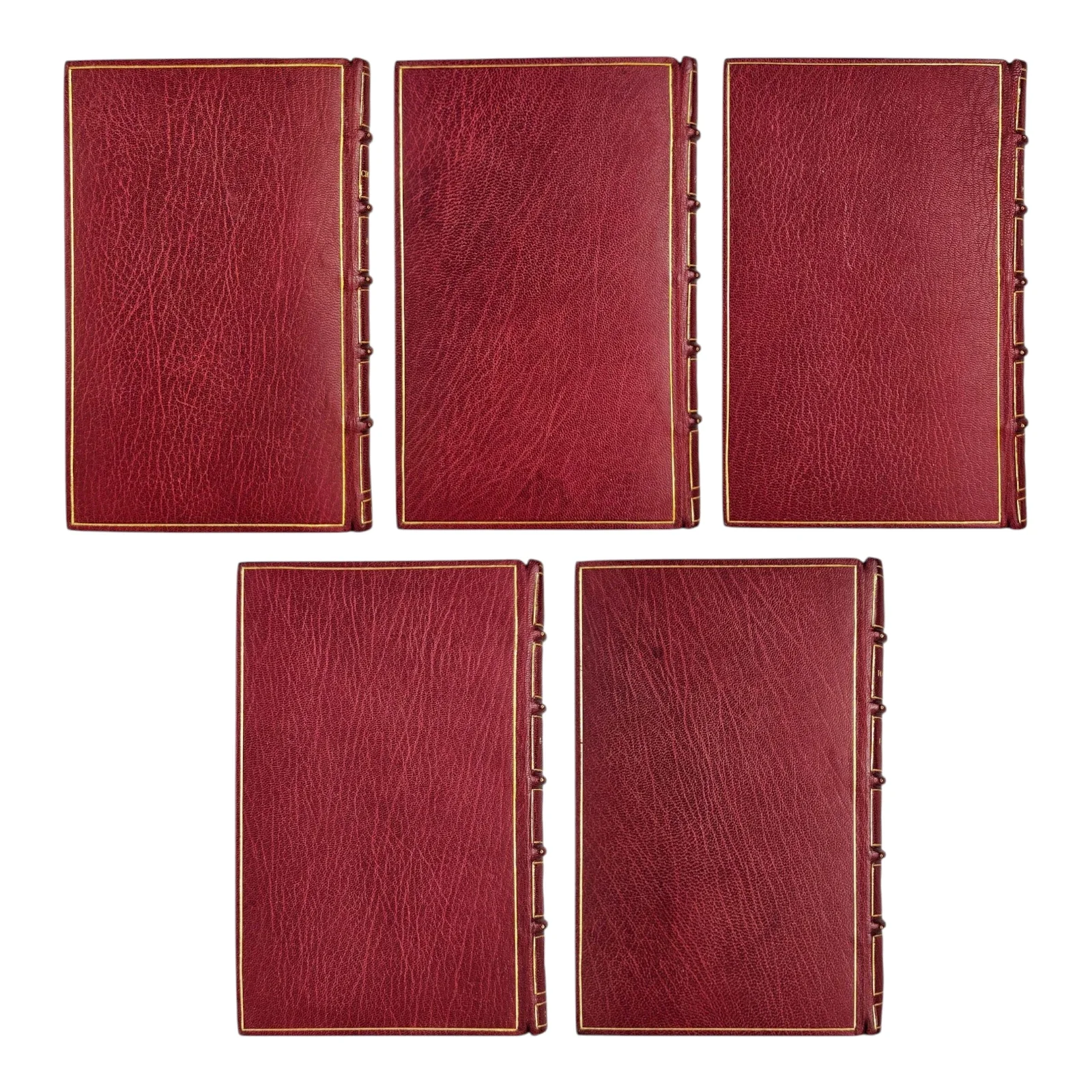 Image 6 of 24
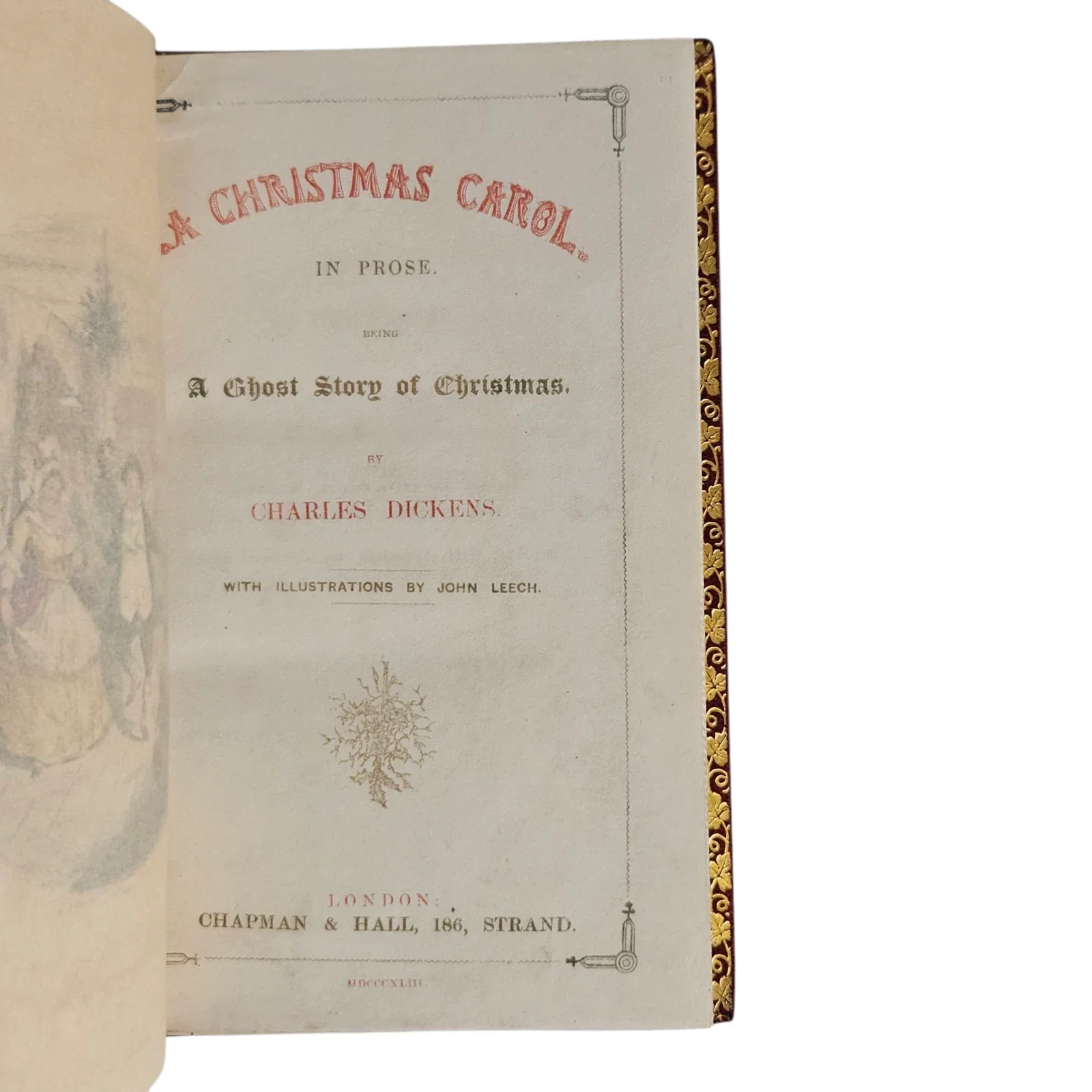 Image 7 of 24
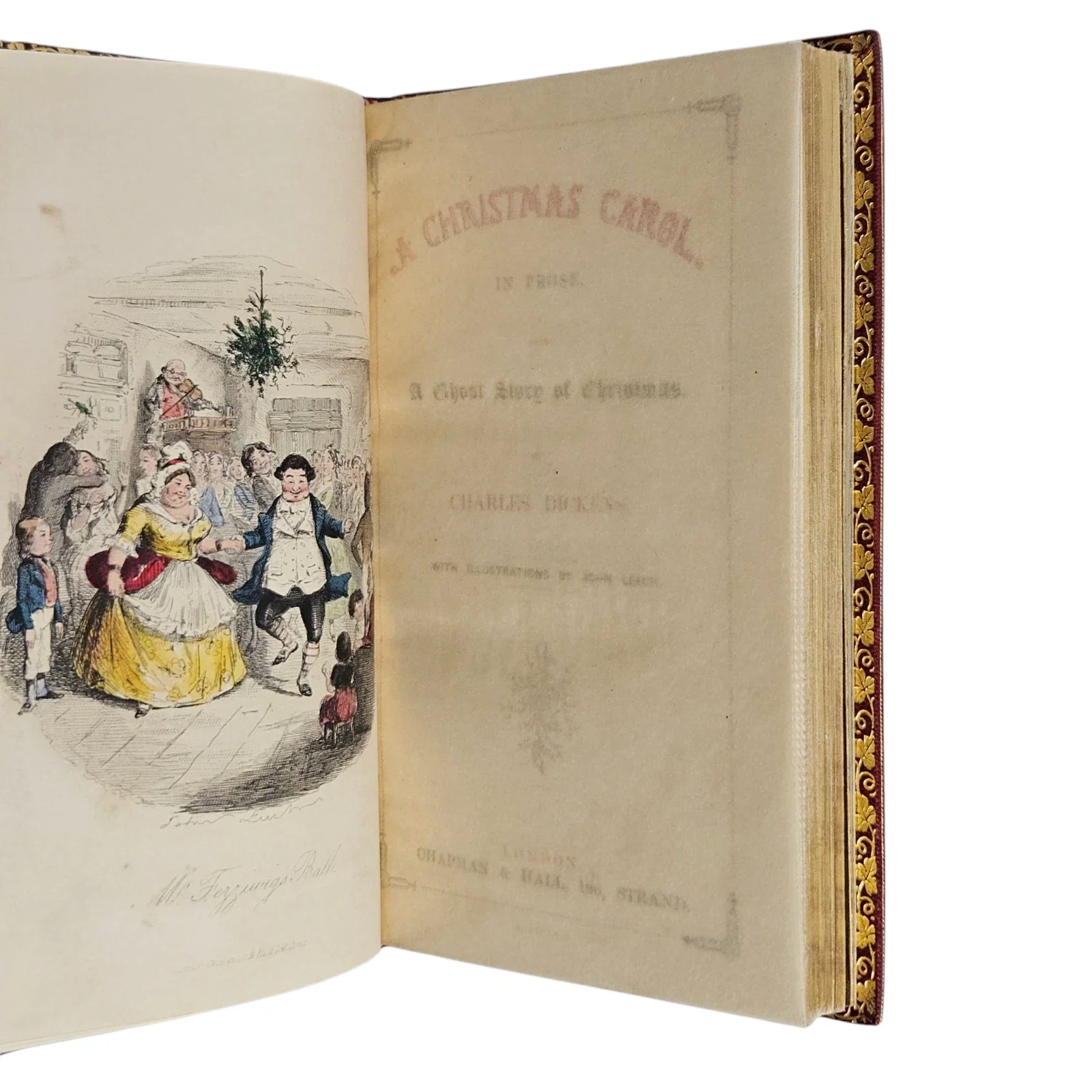 Image 8 of 24
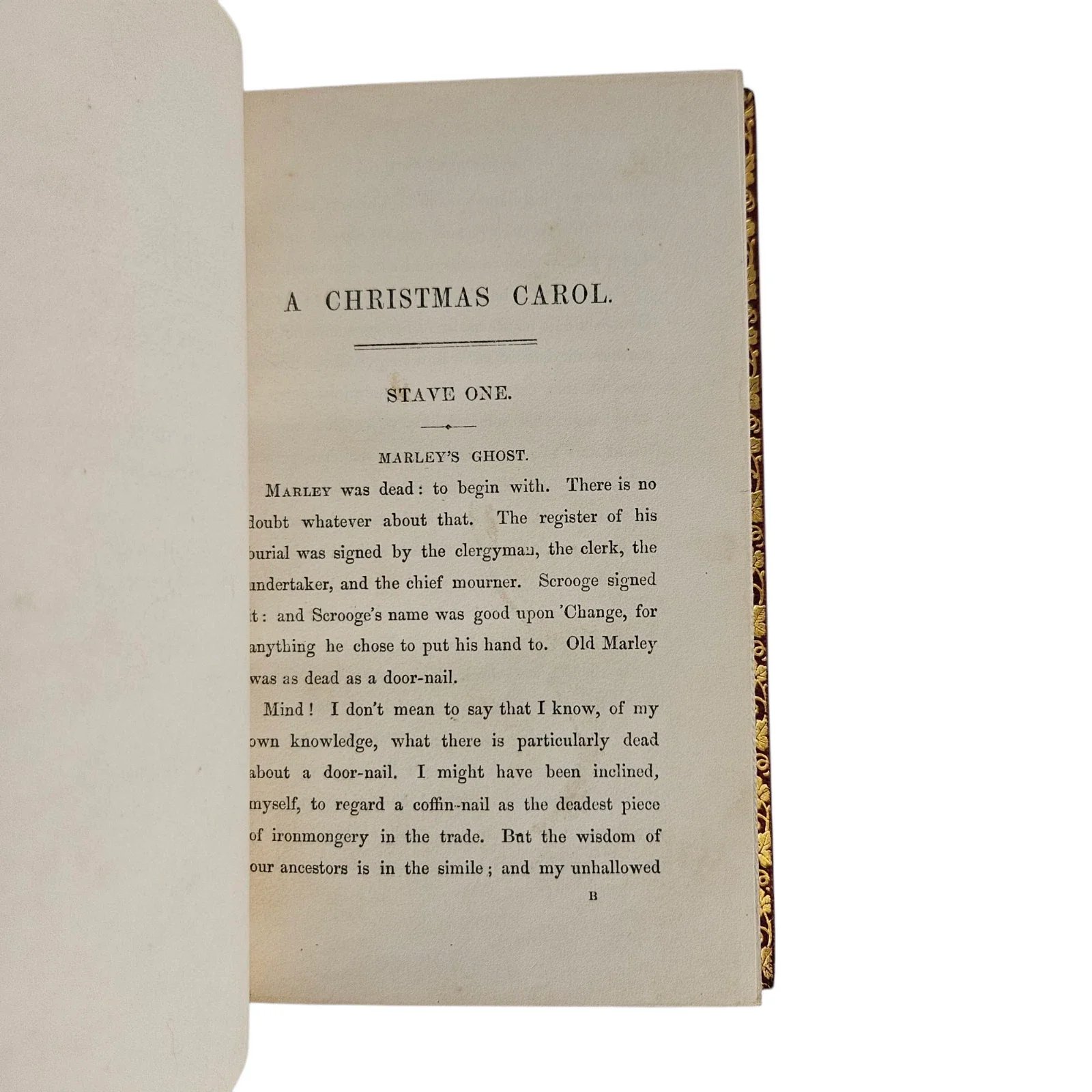 Image 9 of 24
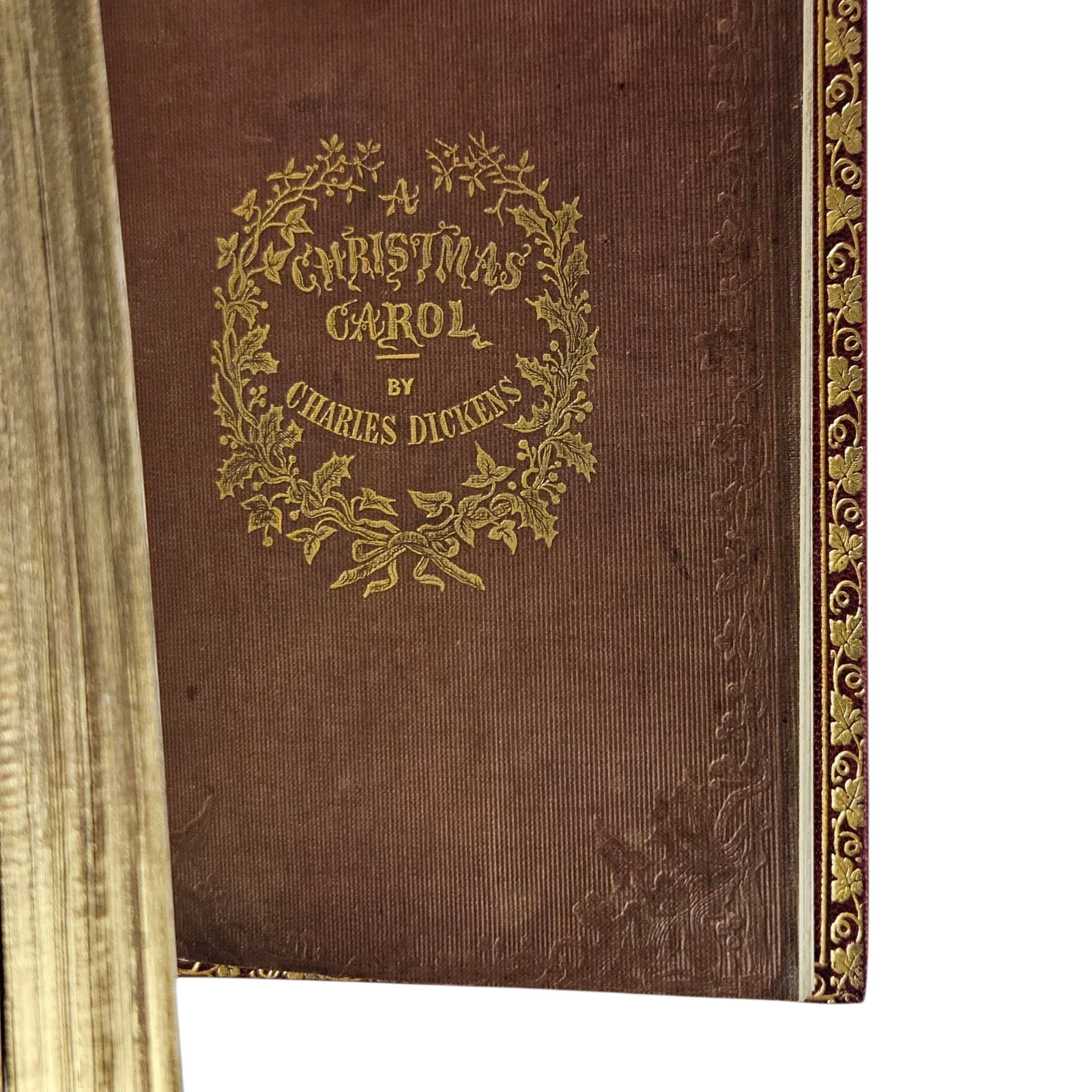 Image 10 of 24
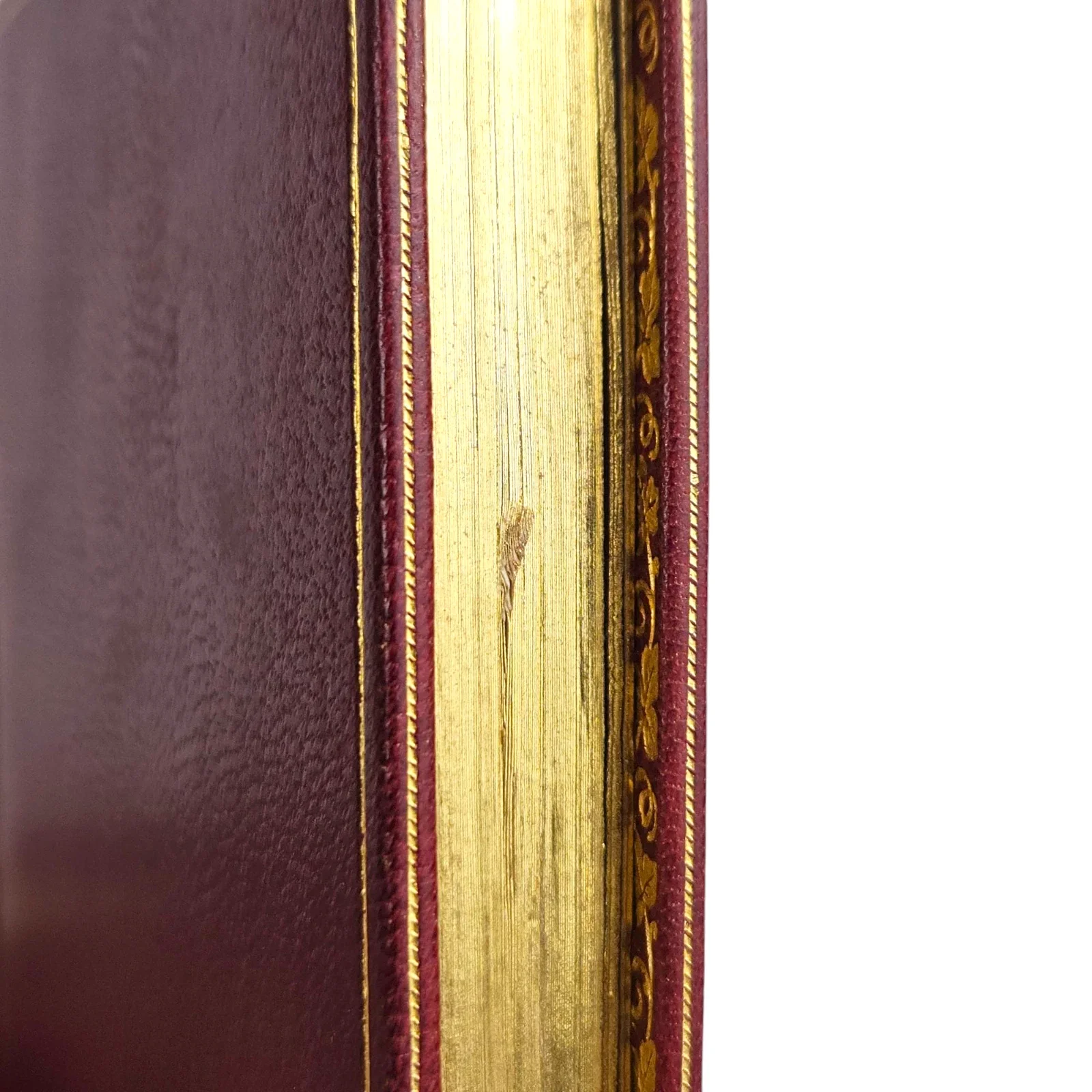 Image 11 of 24
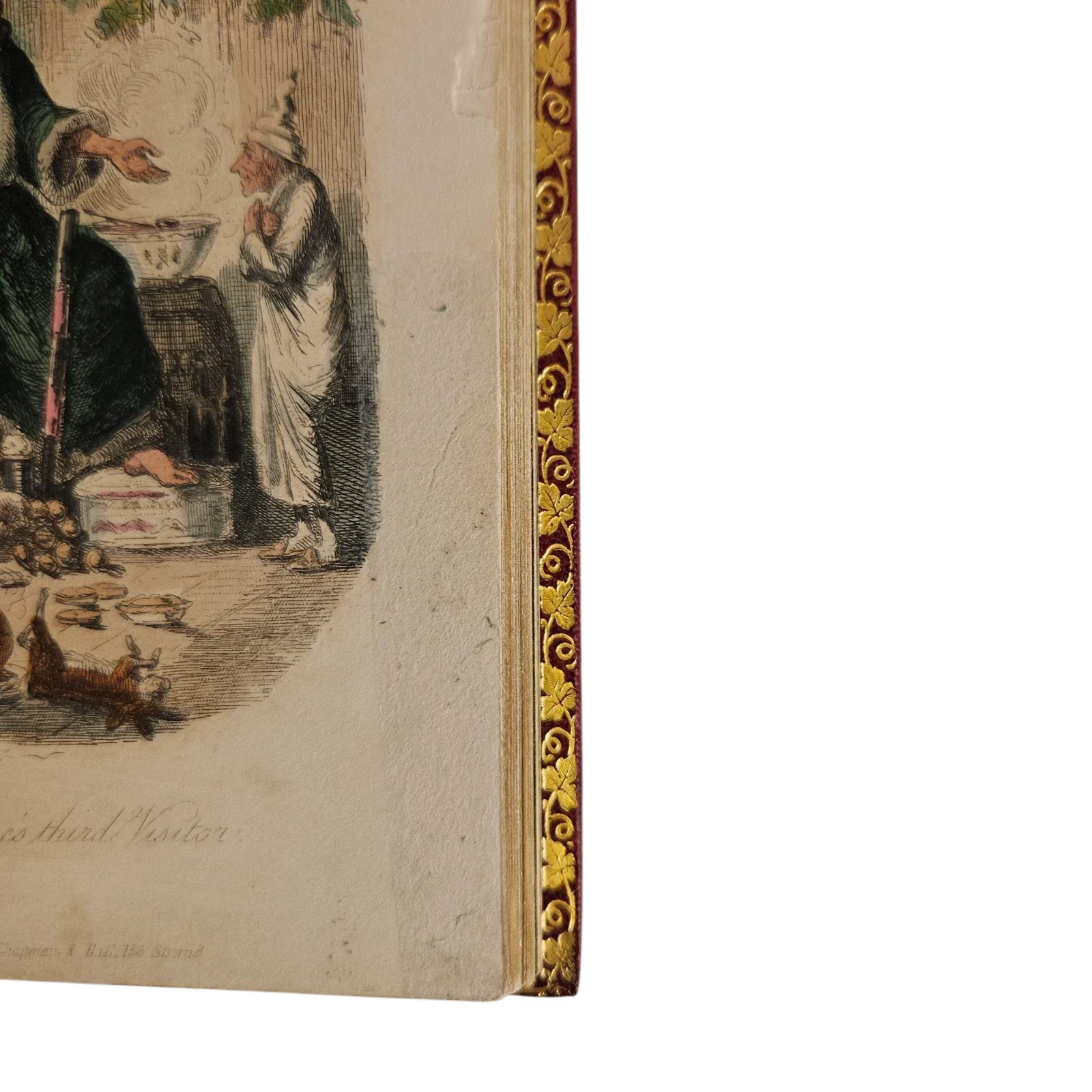 Image 12 of 24
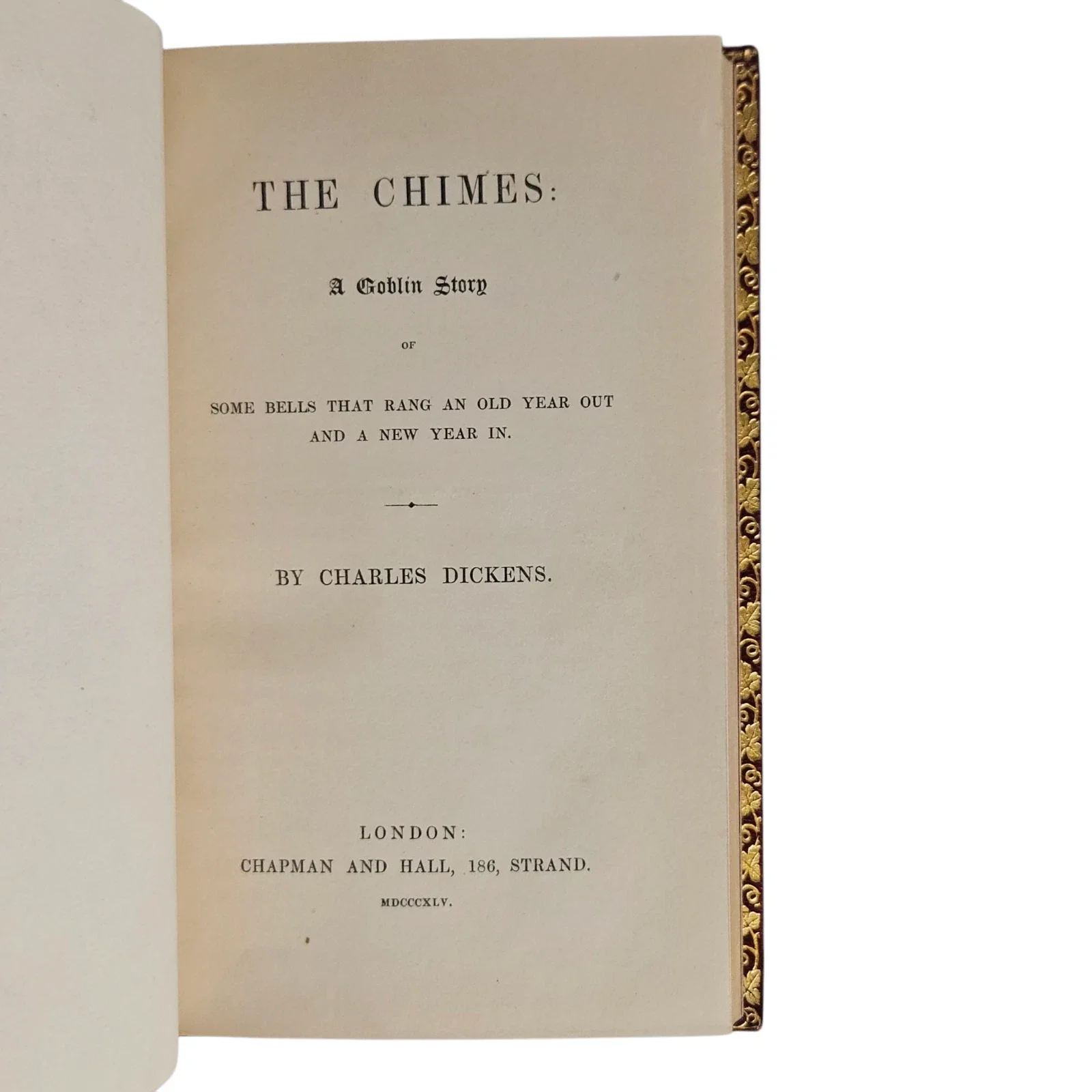 Image 13 of 24
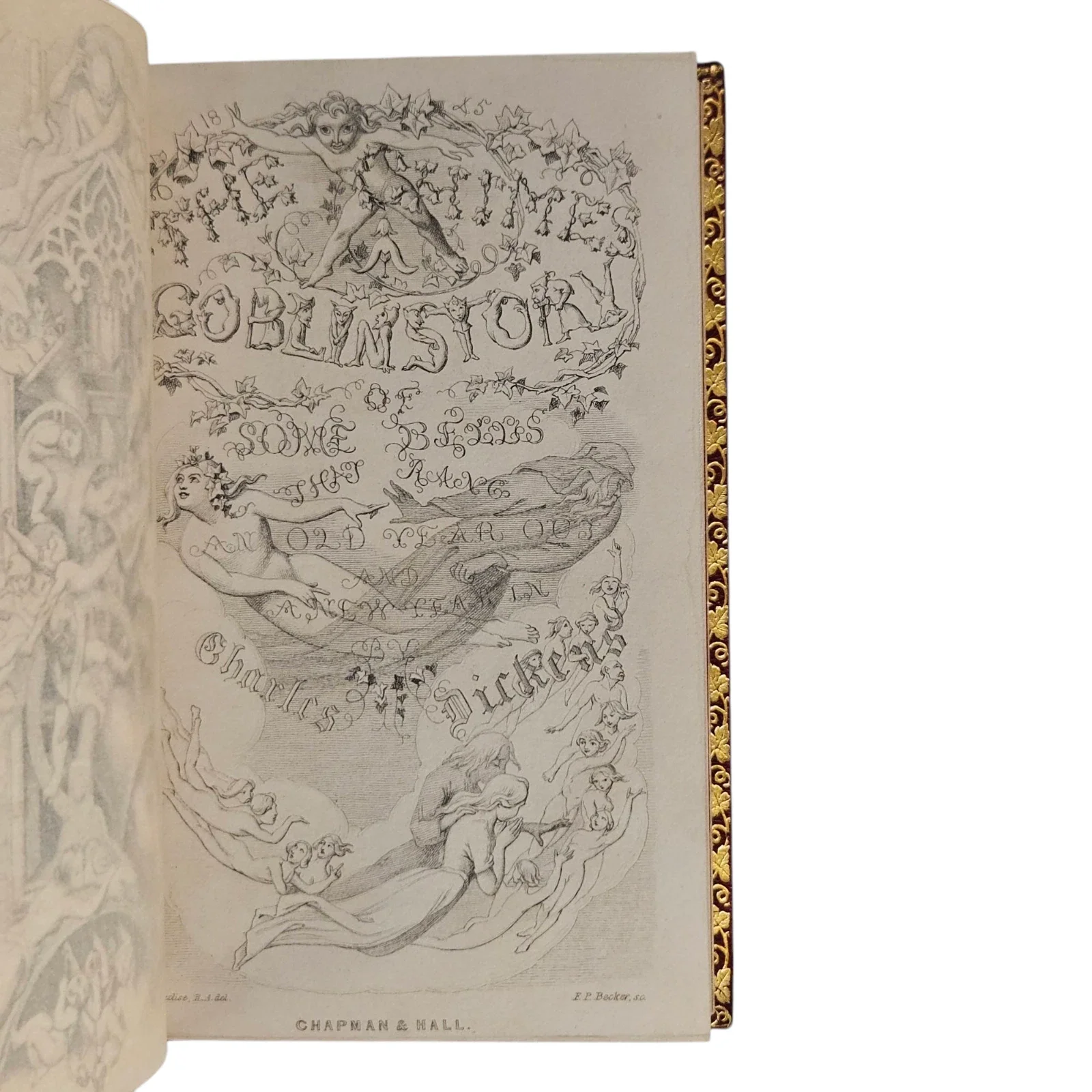 Image 14 of 24
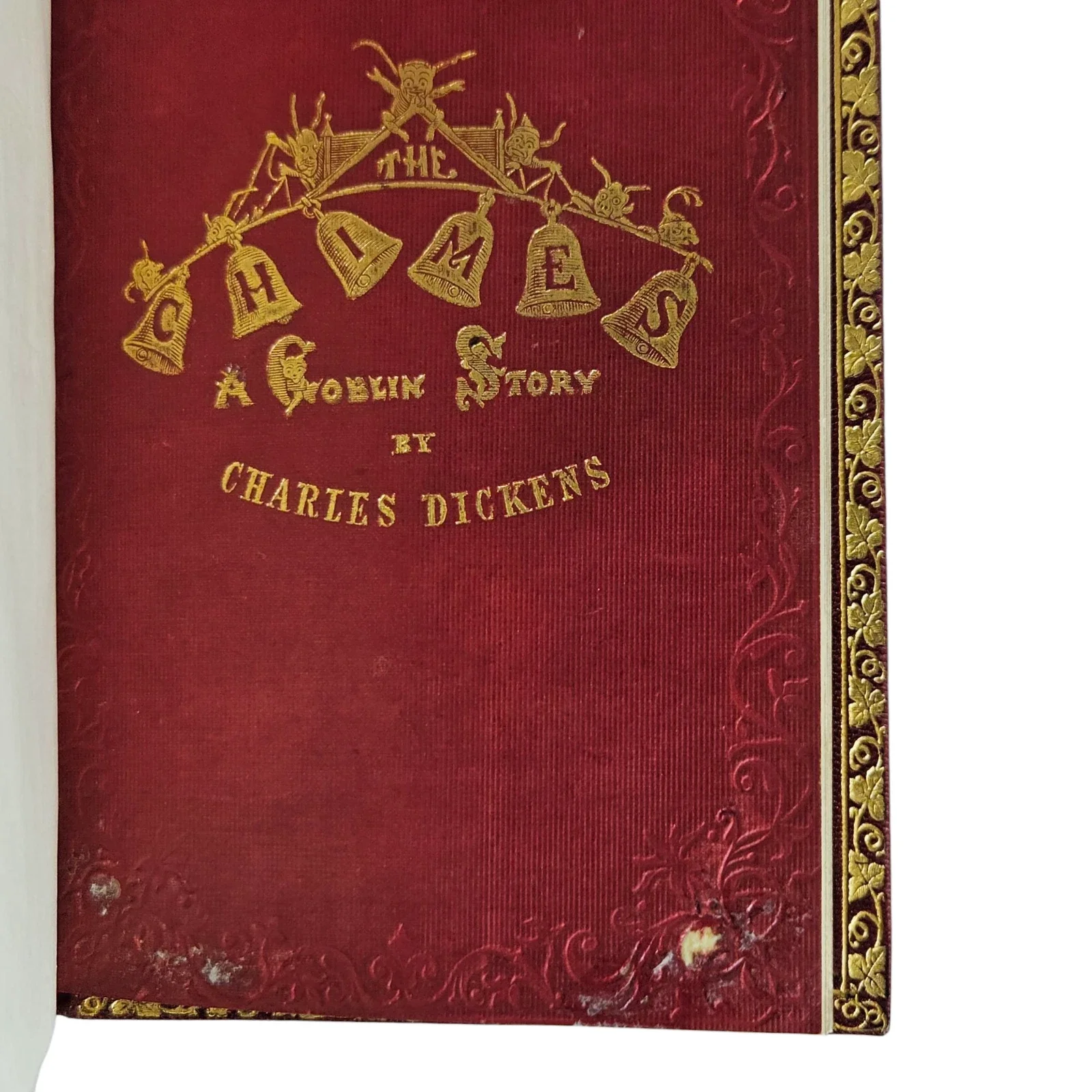 Image 15 of 24
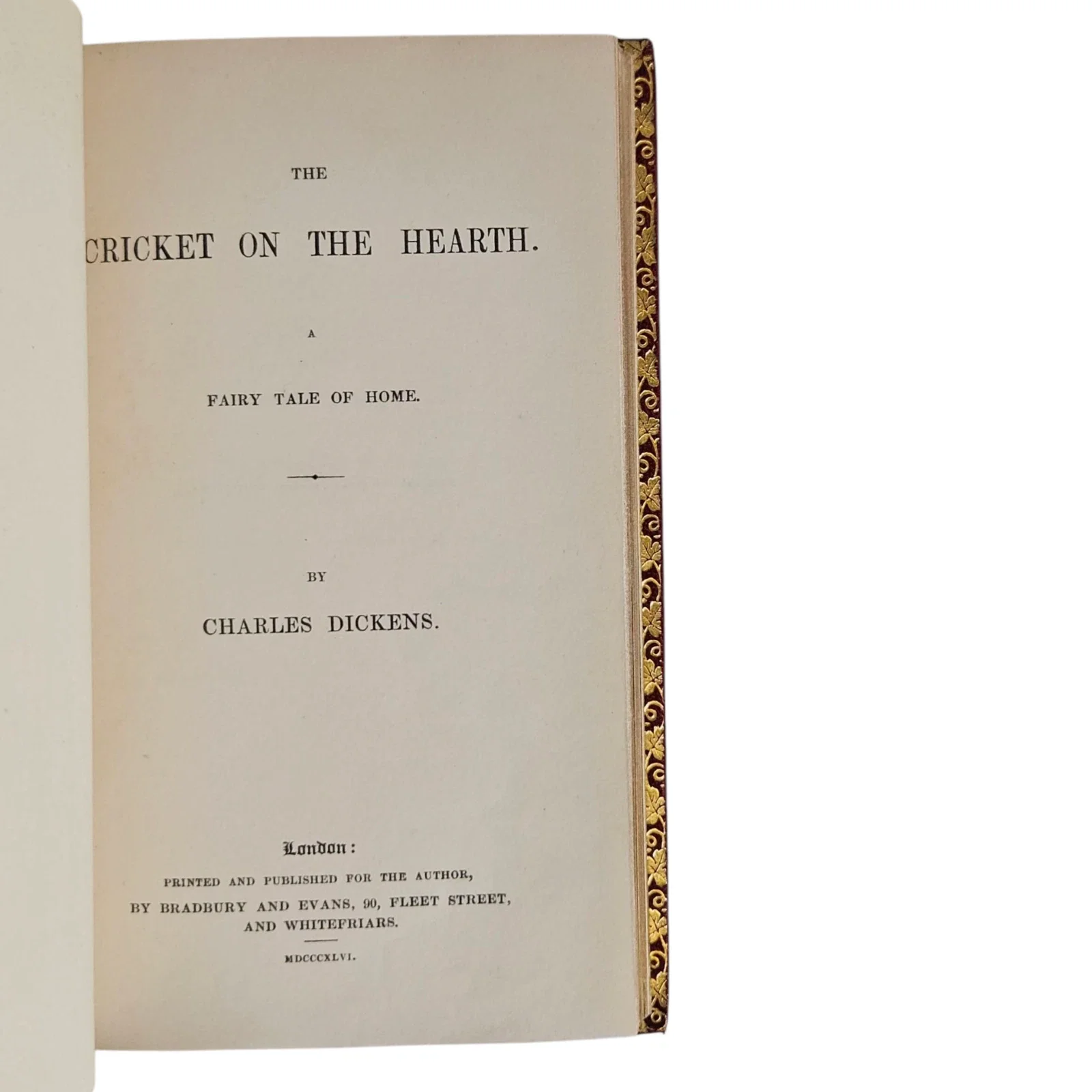 Image 16 of 24
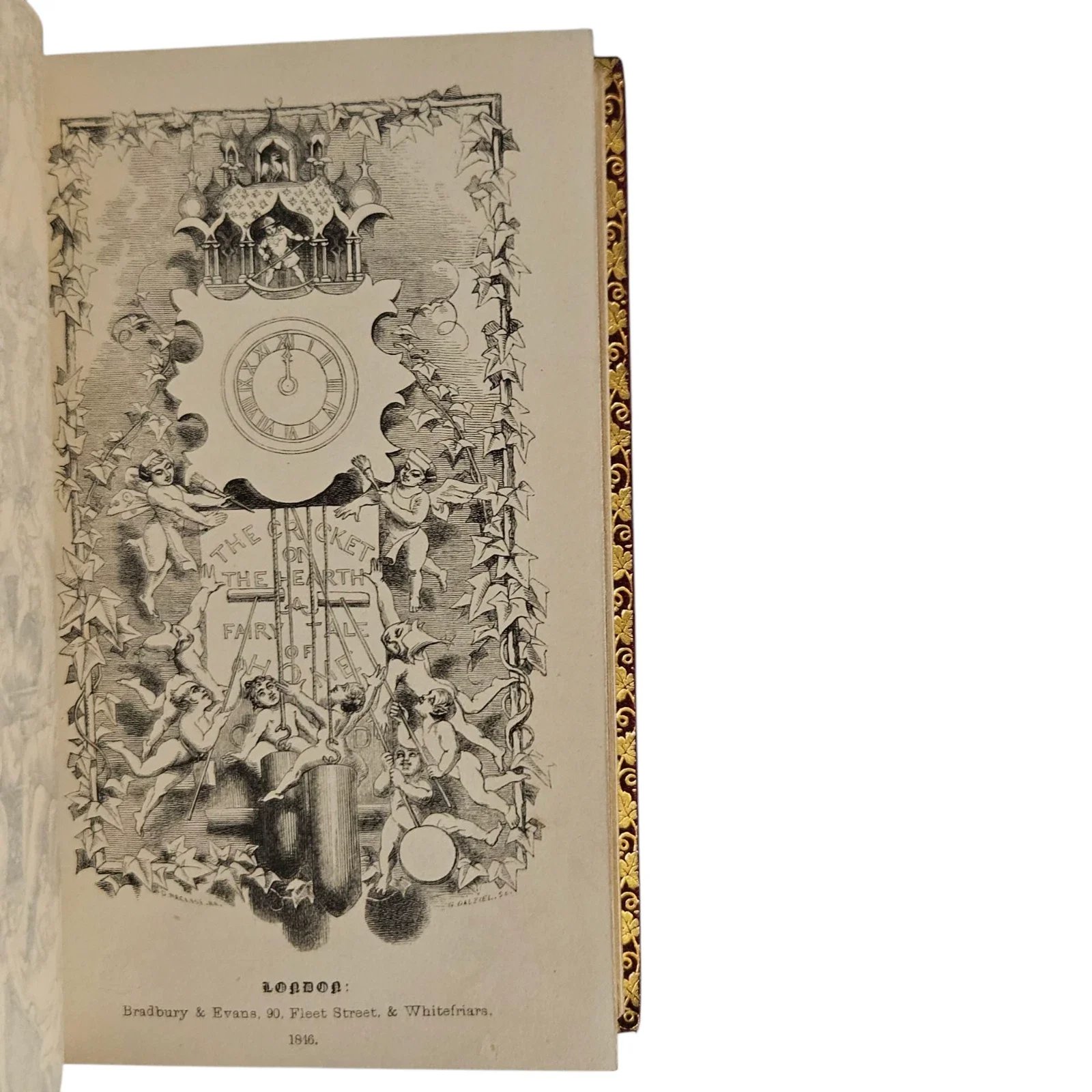 Image 17 of 24
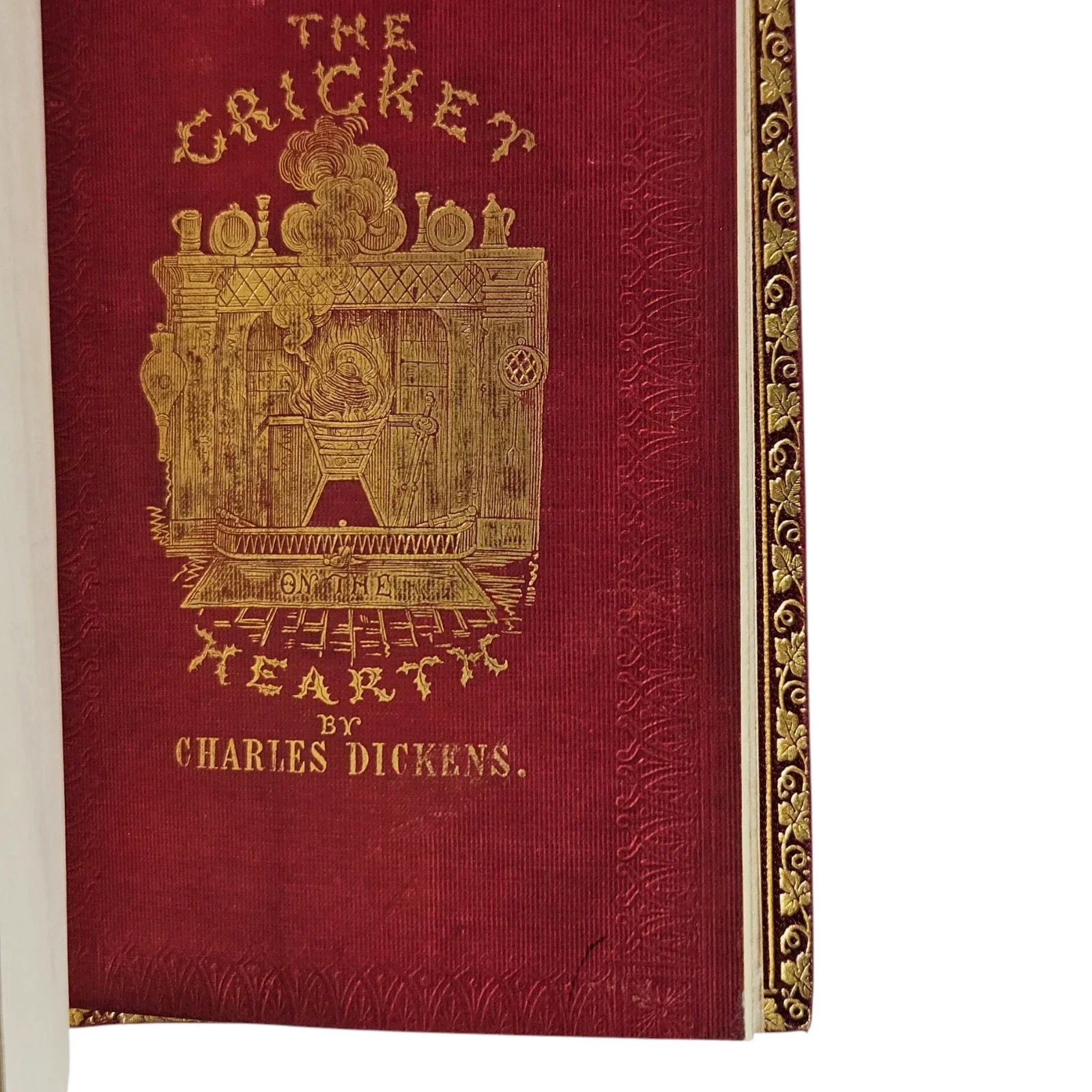 Image 18 of 24
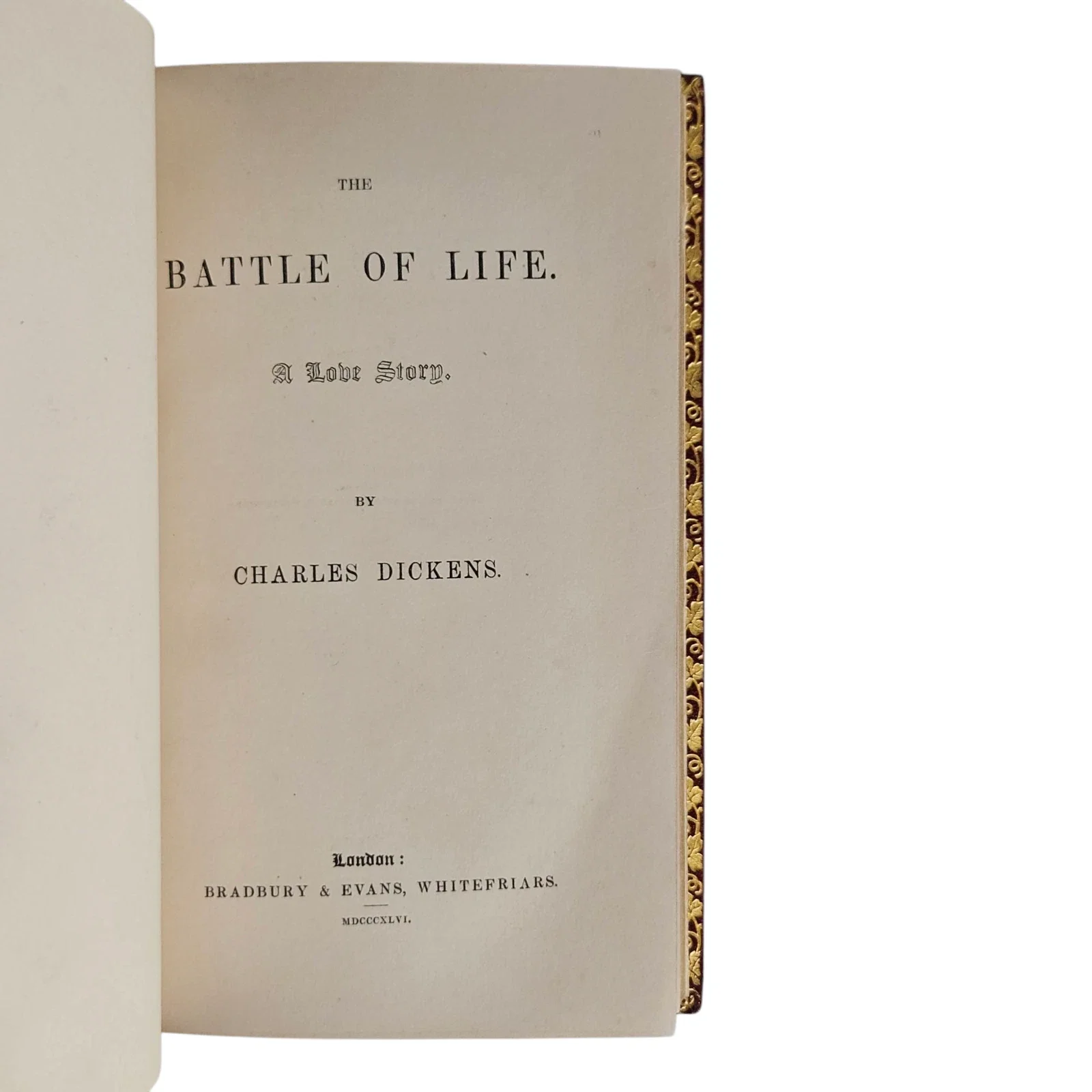 Image 19 of 24
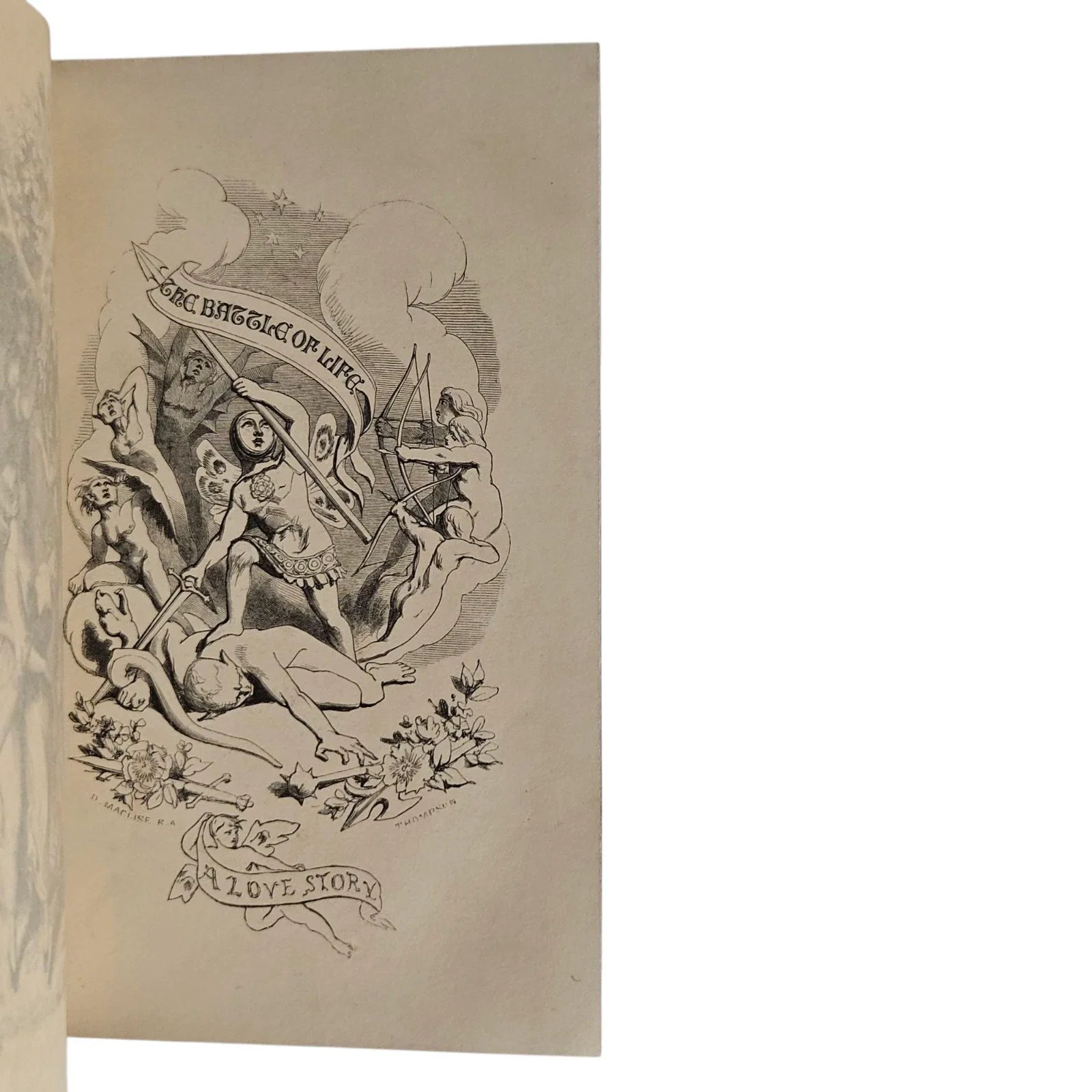 Image 20 of 24
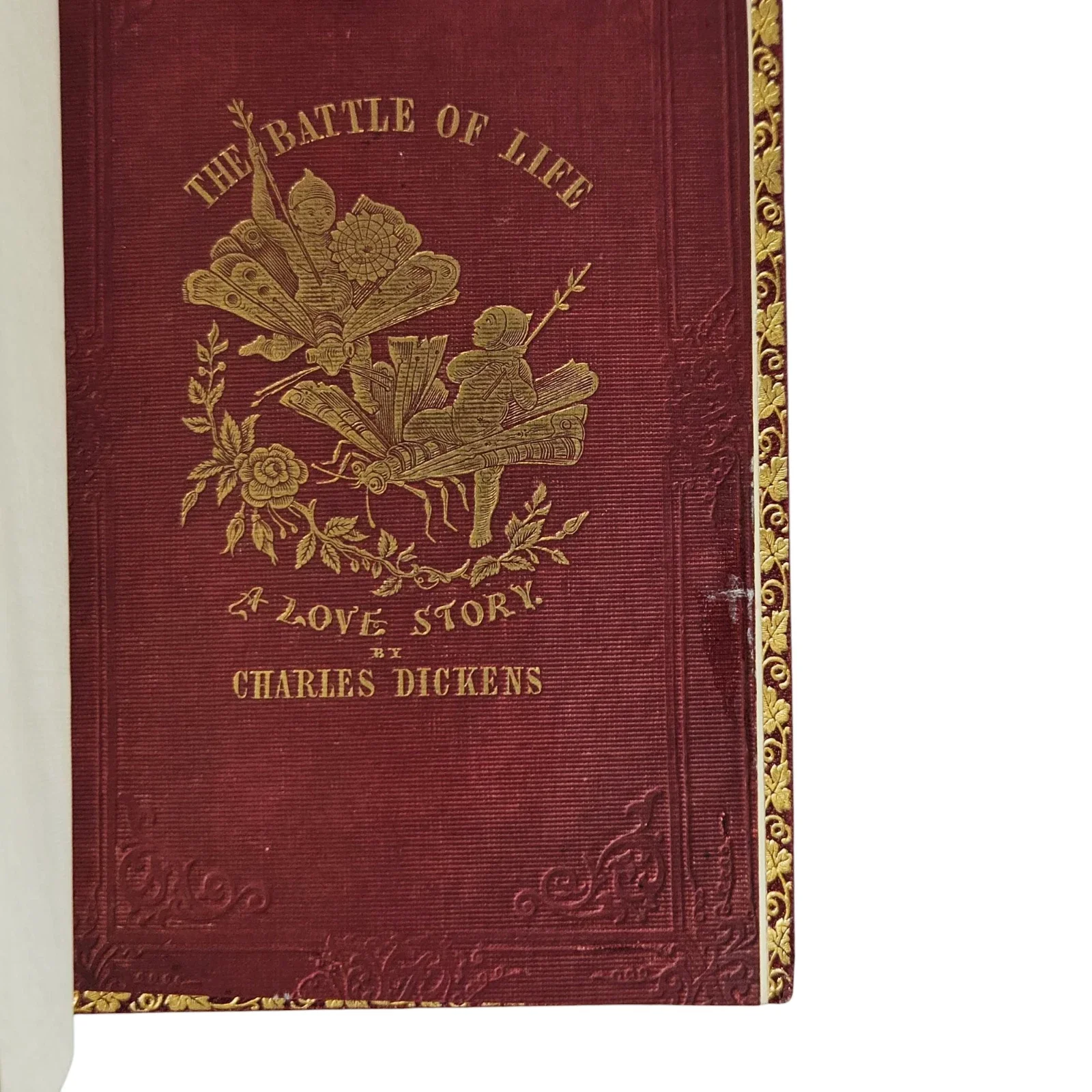 Image 21 of 24
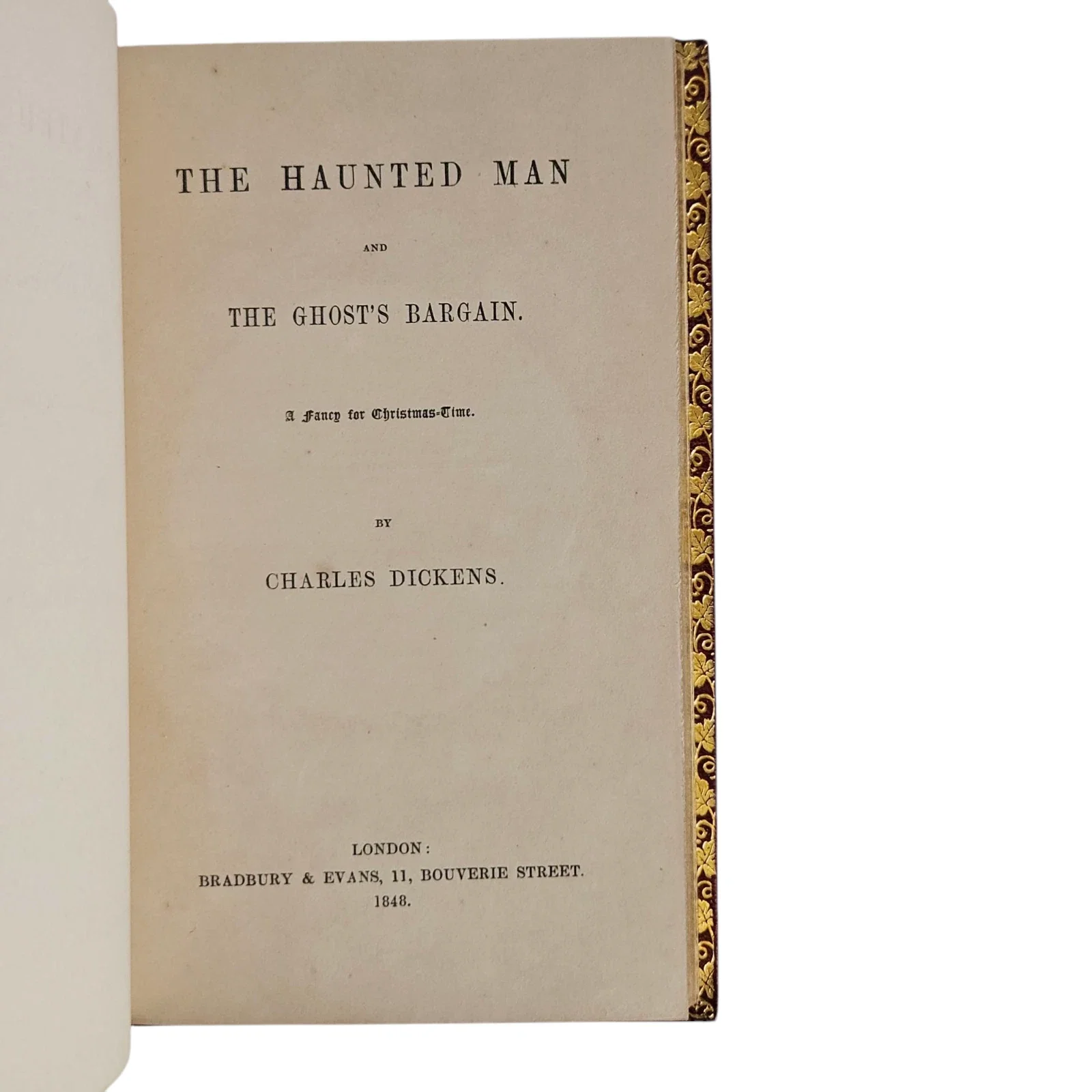 Image 22 of 24
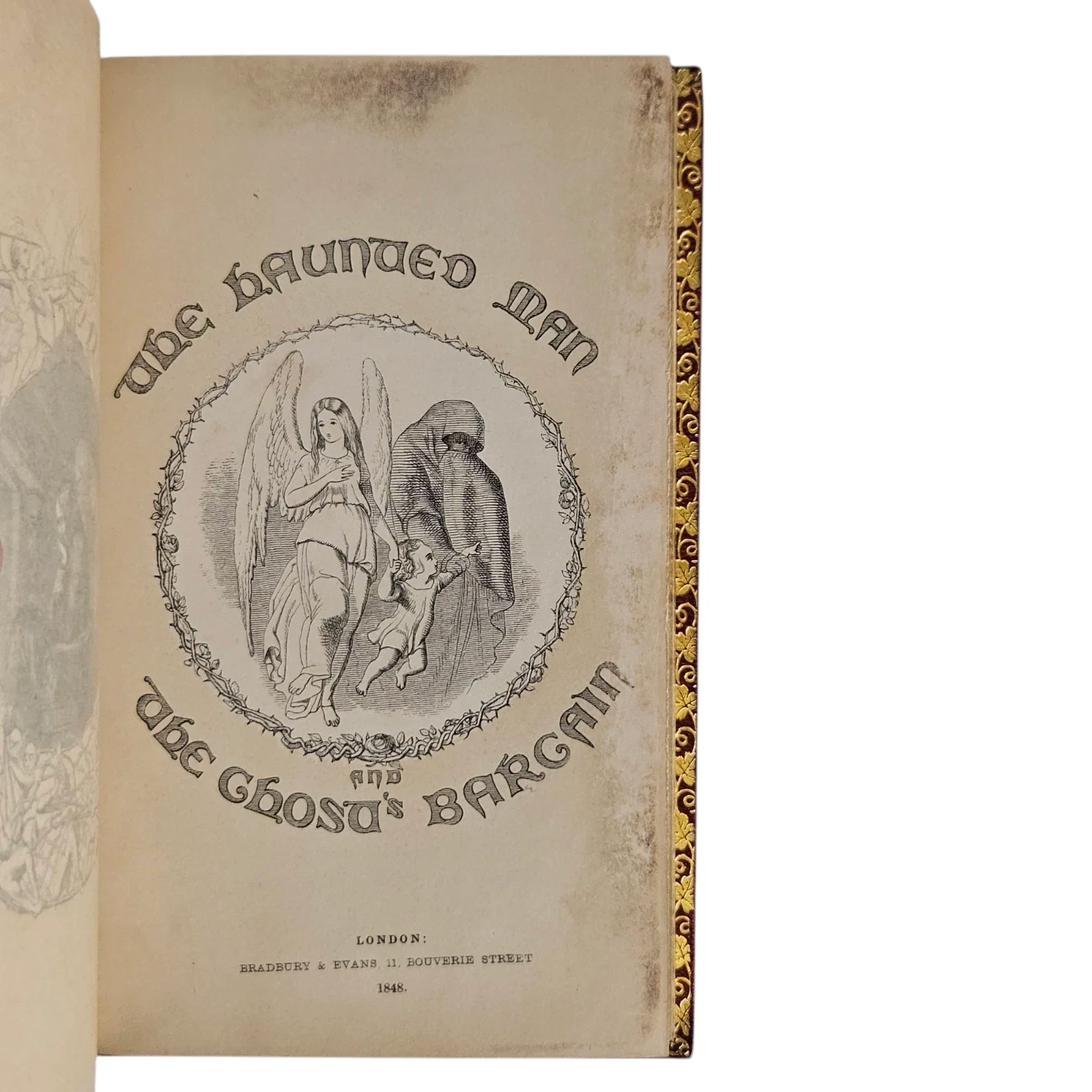 Image 23 of 24
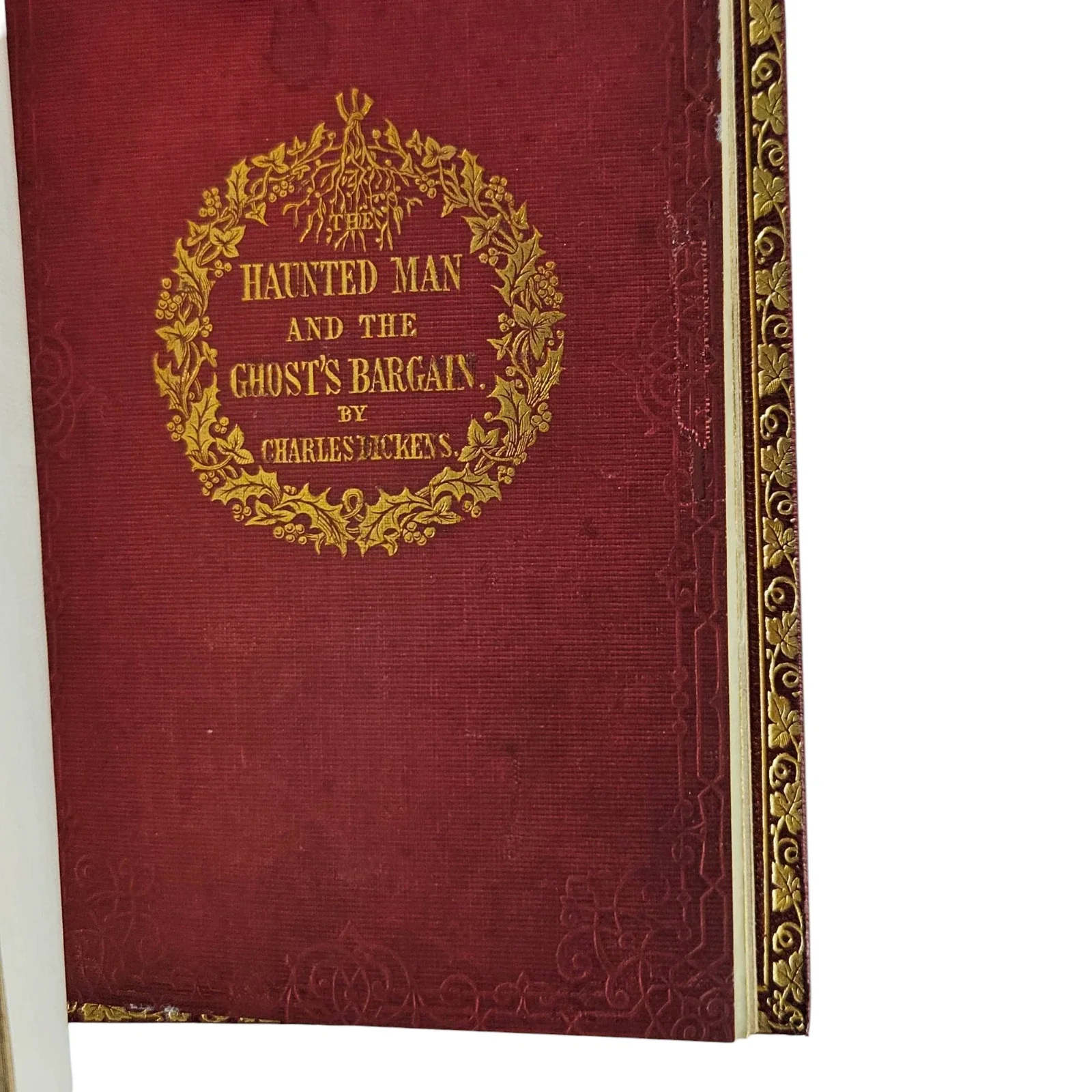 Image 24 of 24