First printing of Miller's landmark novel. Inscribed to American artist Beatrice Heide Thomas in 1938, a friend of Miller's during his days in Paris. Accompanied by a handwritten letter by Miller to Thomas three decades later.
Publisher and Year: Paris: The Obelisk Press, 1934.
Edition: First edition, first printing ("First Published September 1934"). Only 1000 copies of the first printing were produced, many of which were destroyed by authorities in countries where the book was banned. Shifreen & Jackson A9a.
Condition and Description:Rebound in quarter leather over cloth, with the front wrapper featuring the iconic Maurice Kahane art and the rear flap bound in. Tanning to spine. Bottom-right corner of the front board worn through, as shown. Signed and inscribed on the original front free endpaper in June of 1938. Clean pages without any writing or underlining.
Provenance and Association: Inscribed by Henry Miller to American artist Beatrice Heide Thomas (1913–2002) in Paris in June of 1938. Thomas lived in France from 1931 to 1939, coinciding with Miller’s residency at 18 Villa Seurat (1930 to 1939). In 1971, Miller wrote Heide a handwritten letter from his California home, which is sold as part of this listing:
“Dear Beatrice Heide —
Only recently Betty Ryan gave me your address. I discovered, in asking her about you, that you once lent me a hundred dollars — probably when I was desperate.
Did I ever pay you back? If not, please let me know. I don’t know how I could have overlooked such a kindness. All the best!
Henry Miller”
The association with Betty Ryan confirms Heide’s place in Miller’s artistic circle. Ryan, Miller’s downstairs neighbor at 18 Villa Seurat, was among the most formative influences in his Paris years. He credited her with inspiring his journey to Greece in The Colossus of Maroussi, writing, “I would never have gone to Greece had it not been for the girl named Betty Ryan who lived in the same house with me in Paris.” That Ryan remained in contact with both Miller and Heide in 1971 firmly situates Heide within the close circle of artists and confidantes who shaped Miller’s most vital decade.
This copy is part of a limited set of surviving materials documenting Miller’s personal relationship with Heide, which is otherwise absent from his published correspondence and biographies. The size of the loan, nearly $2,000 adjusted for inflation, and the fact that Miller reached out 33 years later to reiterate gratitude, underscores the personal significance of their connection.
"This is libel, slander, defamation of character. This is not a book, in the ordinary sense of the word. No, this is a prolonged insult, a gob of spit in the face of Art, a kick in the pants to God, Man, Destiny, Time, Love, Beauty...what you will. I'm going to sing for you, a little off key perhaps, but I will sing."
Tropic of Cancer is not only regarded as one of the great literary triumphs of the 20th century, but was a centerpiece in the battle for free speech and artistic expression. The novel was banned in the United States for nearly thirty years, and was only legalized in a narrow 5-4 Supreme Court decision that recognized the work as having literary merit.
Inventory ID: 428 - 410 - 065
First printing of Miller's landmark novel. Inscribed to American artist Beatrice Heide Thomas in 1938, a friend of Miller's during his days in Paris. Accompanied by a handwritten letter by Miller to Thomas three decades later.
Publisher and Year: Paris: The Obelisk Press, 1934.
Edition: First edition, first printing ("First Published September 1934"). Only 1000 copies of the first printing were produced, many of which were destroyed by authorities in countries where the book was banned. Shifreen & Jackson A9a.
Condition and Description:Rebound in quarter leather over cloth, with the front wrapper featuring the iconic Maurice Kahane art and the rear flap bound in. Tanning to spine. Bottom-right corner of the front board worn through, as shown. Signed and inscribed on the original front free endpaper in June of 1938. Clean pages without any writing or underlining.
Provenance and Association: Inscribed by Henry Miller to American artist Beatrice Heide Thomas (1913–2002) in Paris in June of 1938. Thomas lived in France from 1931 to 1939, coinciding with Miller’s residency at 18 Villa Seurat (1930 to 1939). In 1971, Miller wrote Heide a handwritten letter from his California home, which is sold as part of this listing:
“Dear Beatrice Heide —
Only recently Betty Ryan gave me your address. I discovered, in asking her about you, that you once lent me a hundred dollars — probably when I was desperate.
Did I ever pay you back? If not, please let me know. I don’t know how I could have overlooked such a kindness. All the best!
Henry Miller”
The association with Betty Ryan confirms Heide’s place in Miller’s artistic circle. Ryan, Miller’s downstairs neighbor at 18 Villa Seurat, was among the most formative influences in his Paris years. He credited her with inspiring his journey to Greece in The Colossus of Maroussi, writing, “I would never have gone to Greece had it not been for the girl named Betty Ryan who lived in the same house with me in Paris.” That Ryan remained in contact with both Miller and Heide in 1971 firmly situates Heide within the close circle of artists and confidantes who shaped Miller’s most vital decade.
This copy is part of a limited set of surviving materials documenting Miller’s personal relationship with Heide, which is otherwise absent from his published correspondence and biographies. The size of the loan, nearly $2,000 adjusted for inflation, and the fact that Miller reached out 33 years later to reiterate gratitude, underscores the personal significance of their connection.
"This is libel, slander, defamation of character. This is not a book, in the ordinary sense of the word. No, this is a prolonged insult, a gob of spit in the face of Art, a kick in the pants to God, Man, Destiny, Time, Love, Beauty...what you will. I'm going to sing for you, a little off key perhaps, but I will sing."
Tropic of Cancer is not only regarded as one of the great literary triumphs of the 20th century, but was a centerpiece in the battle for free speech and artistic expression. The novel was banned in the United States for nearly thirty years, and was only legalized in a narrow 5-4 Supreme Court decision that recognized the work as having literary merit.
Inventory ID: 428 - 410 - 065

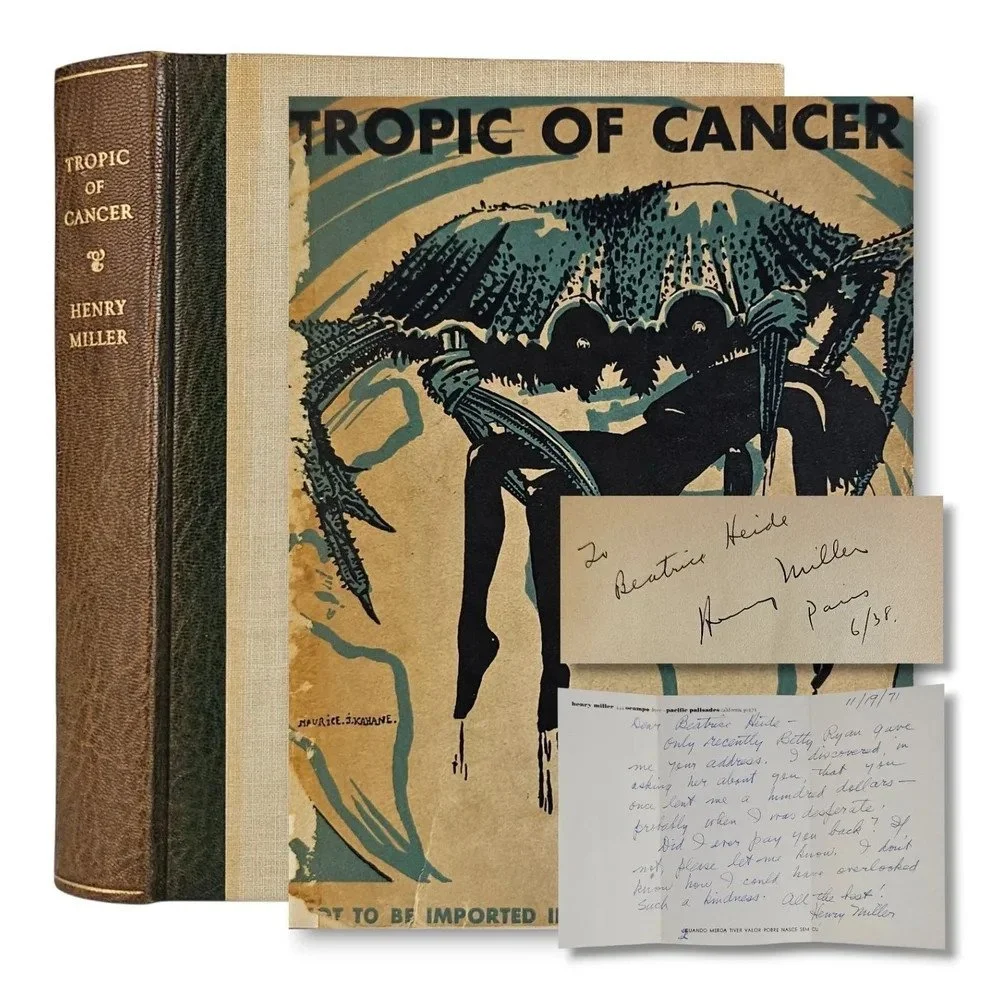 Image 1 of 18
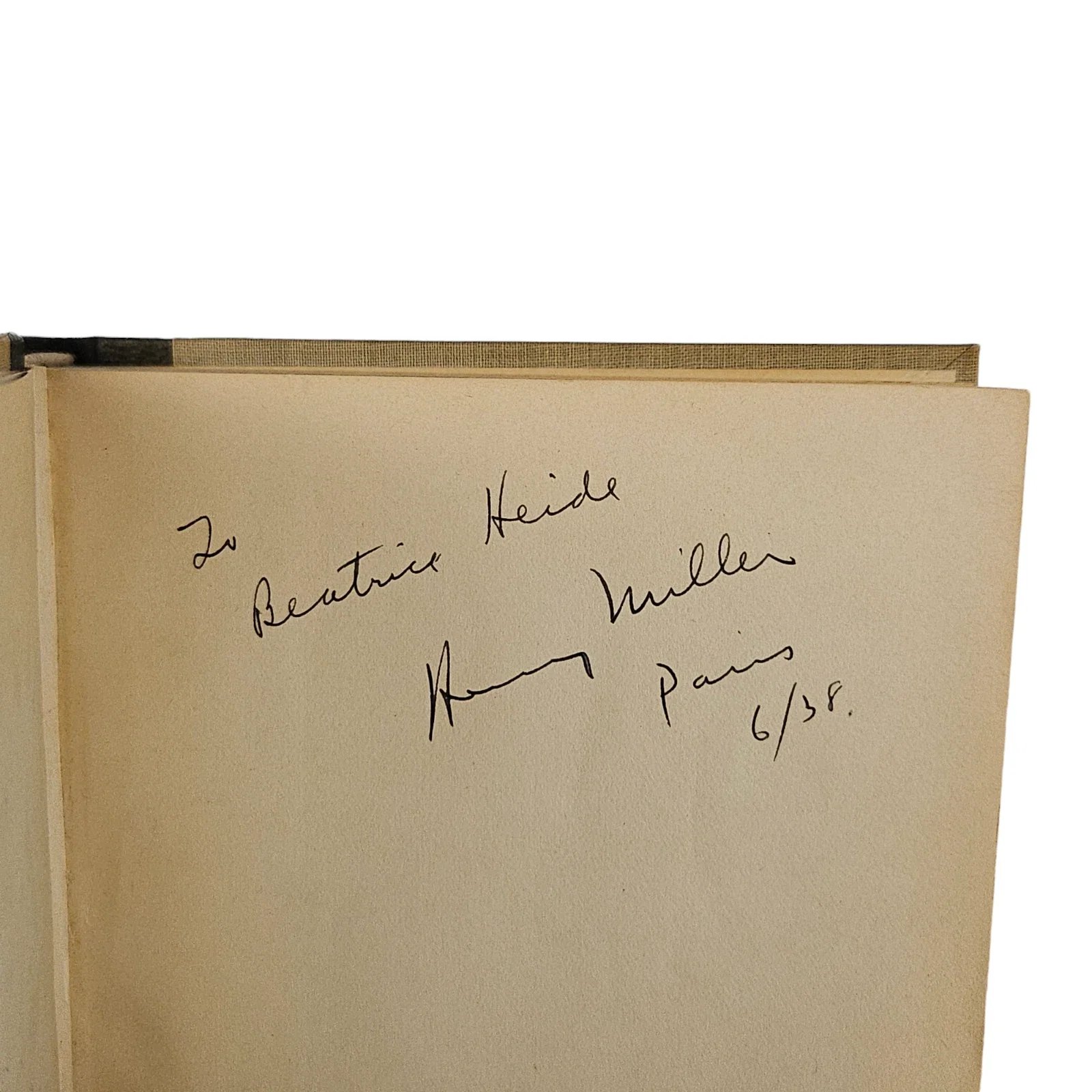 Image 2 of 18
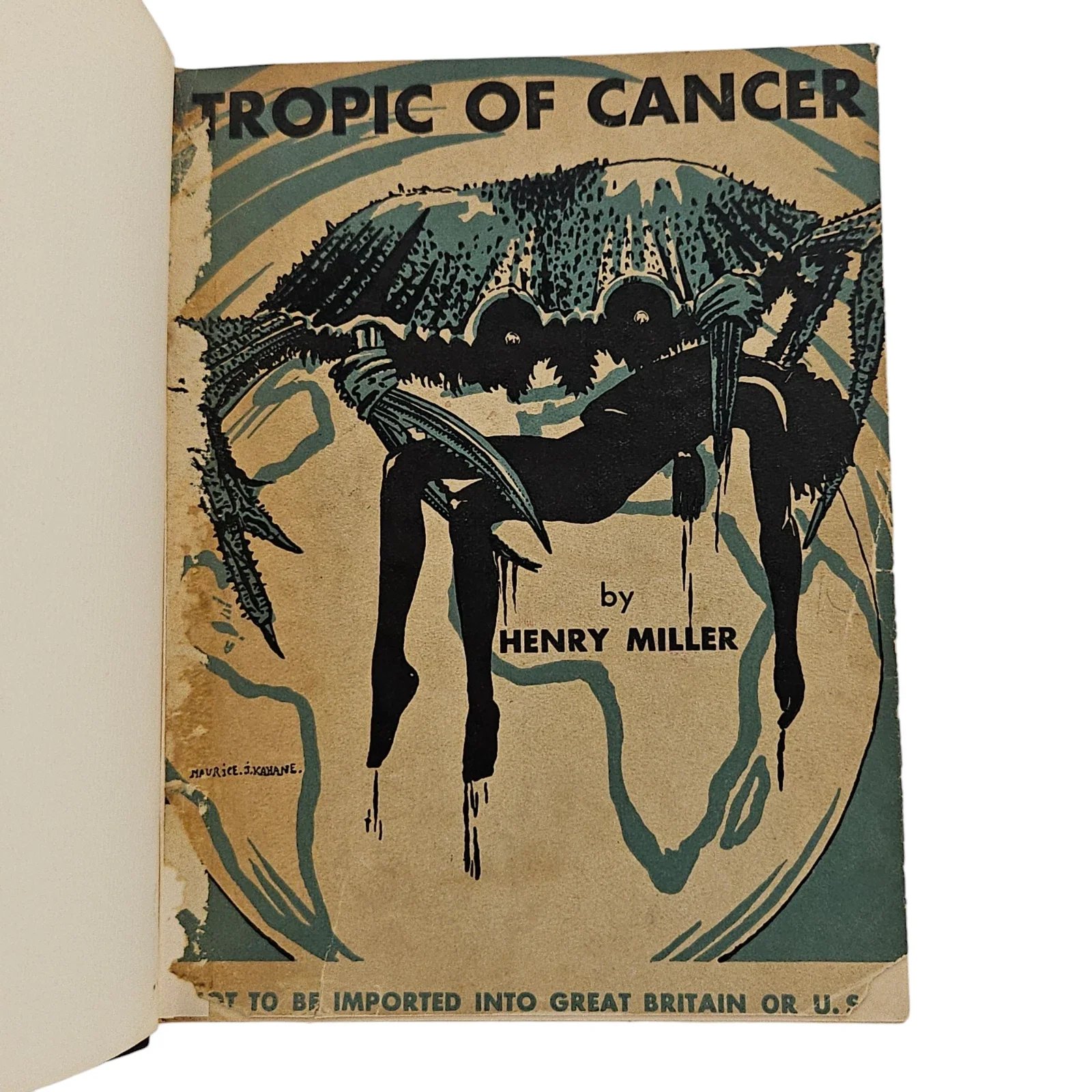 Image 3 of 18
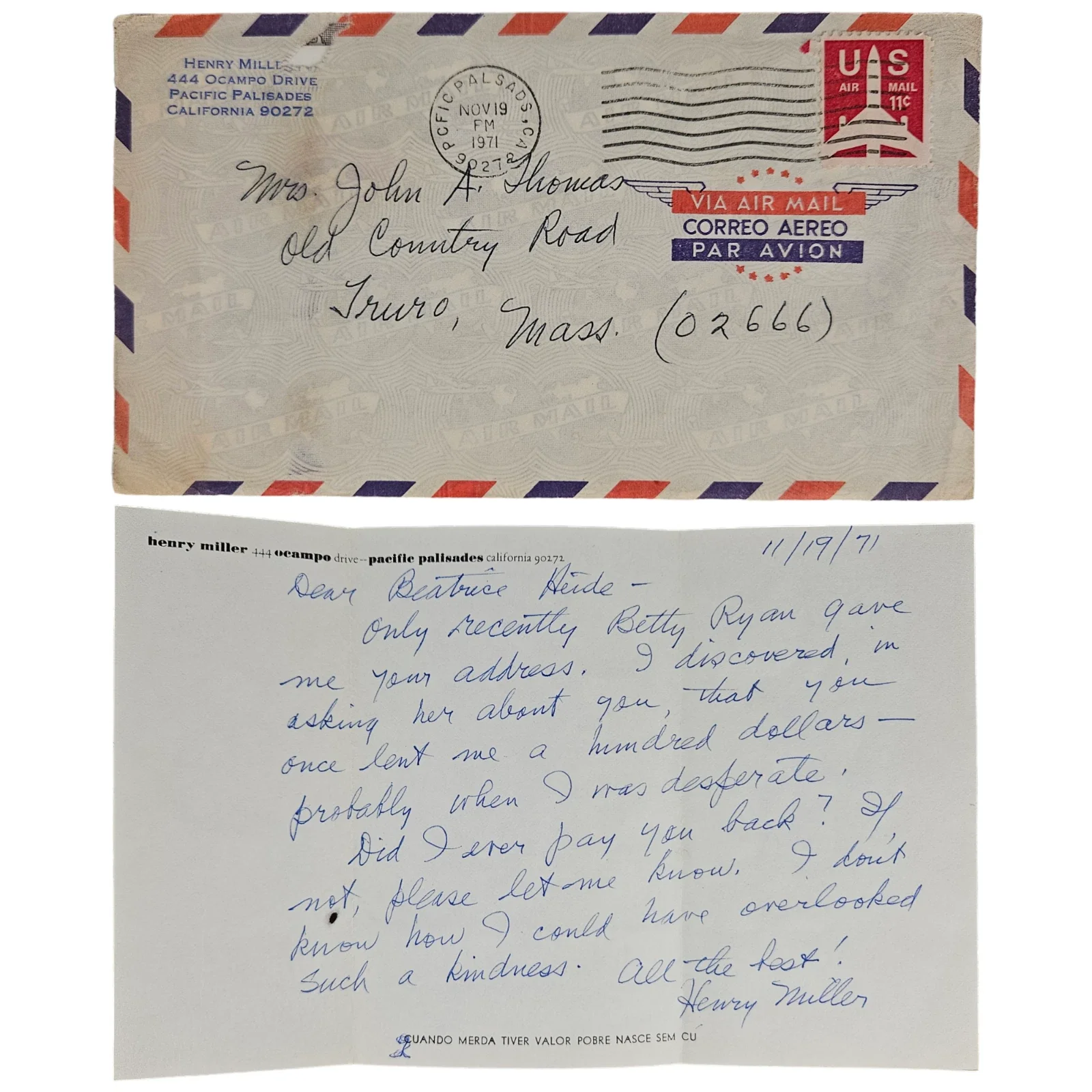 Image 4 of 18
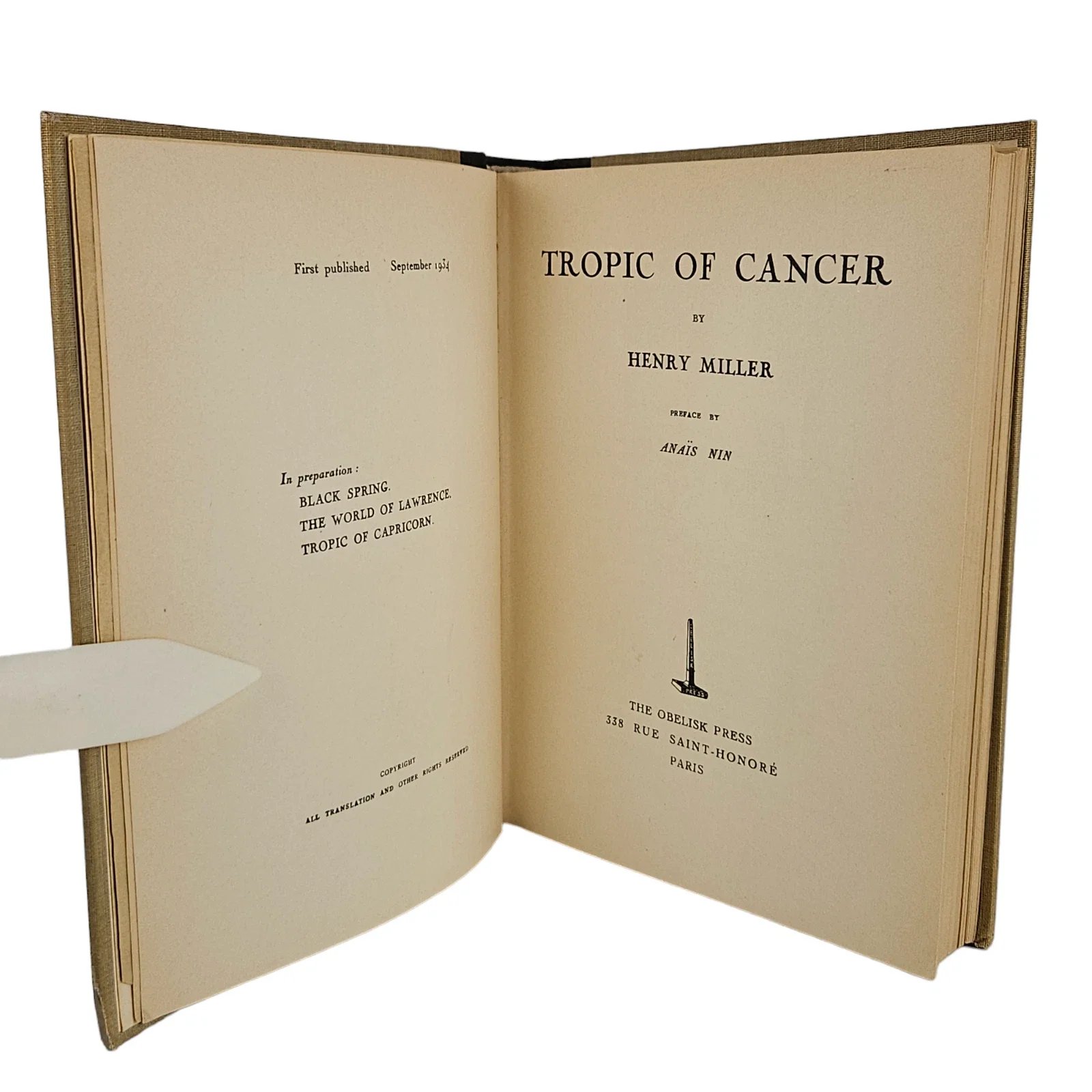 Image 5 of 18
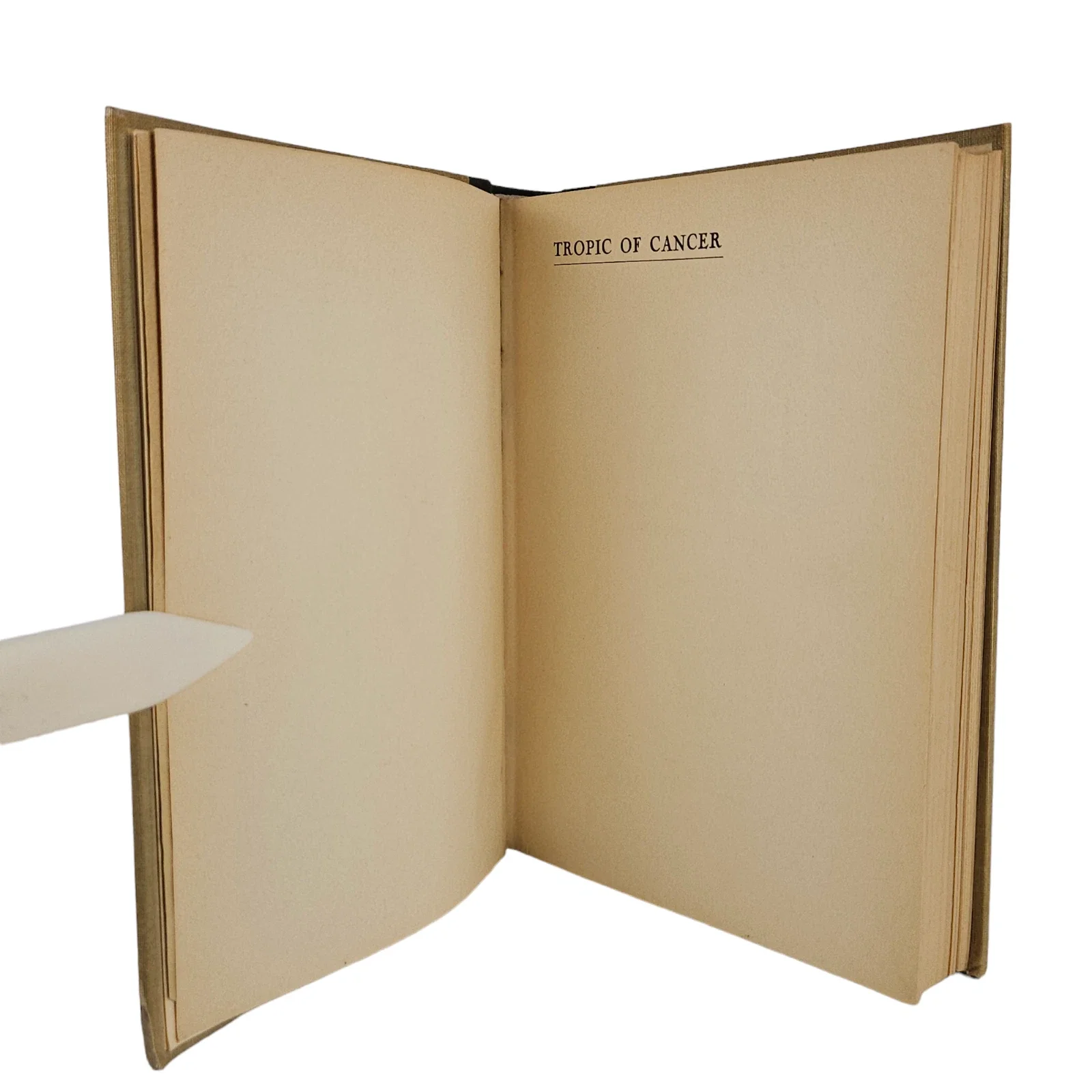 Image 6 of 18
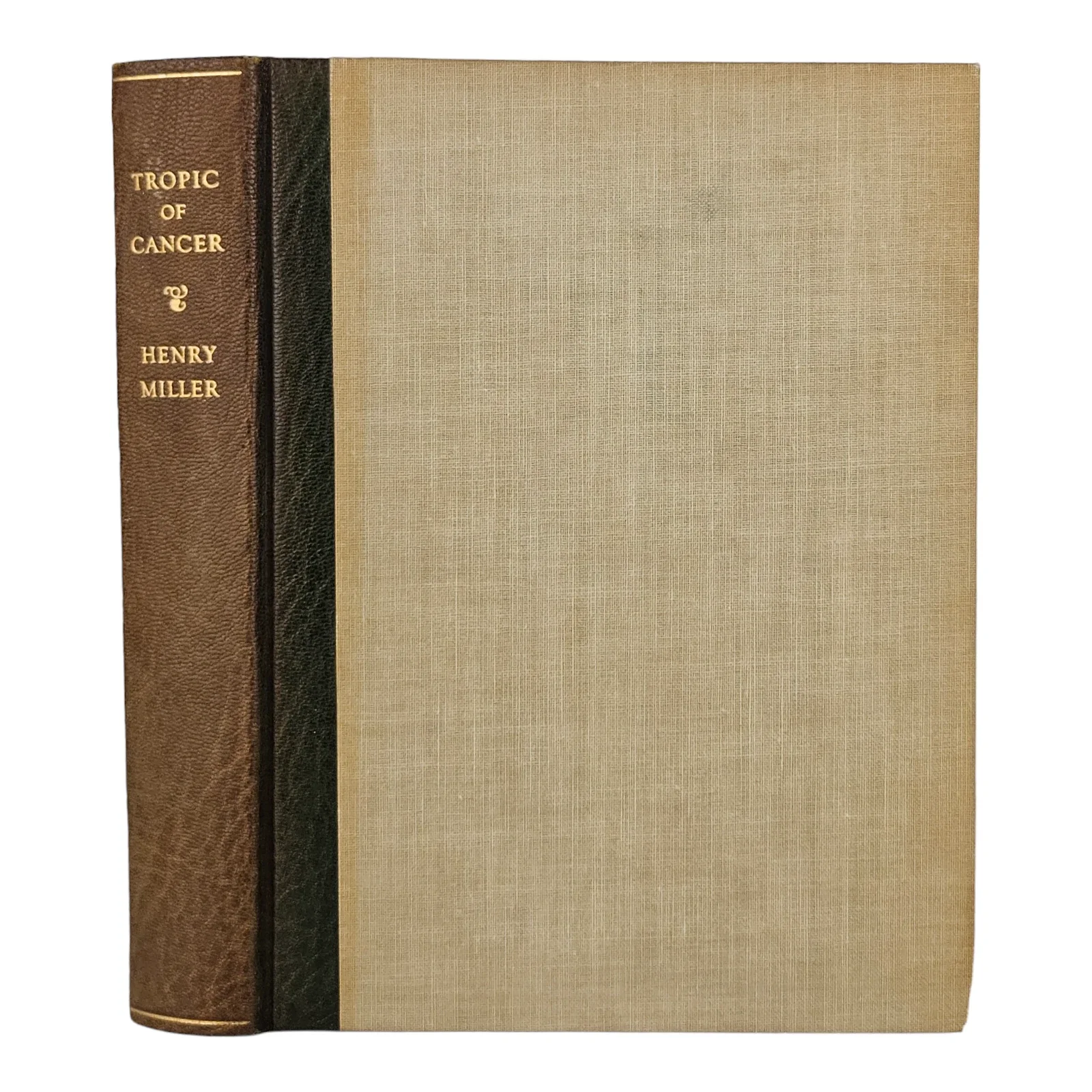 Image 7 of 18
 Image 8 of 18
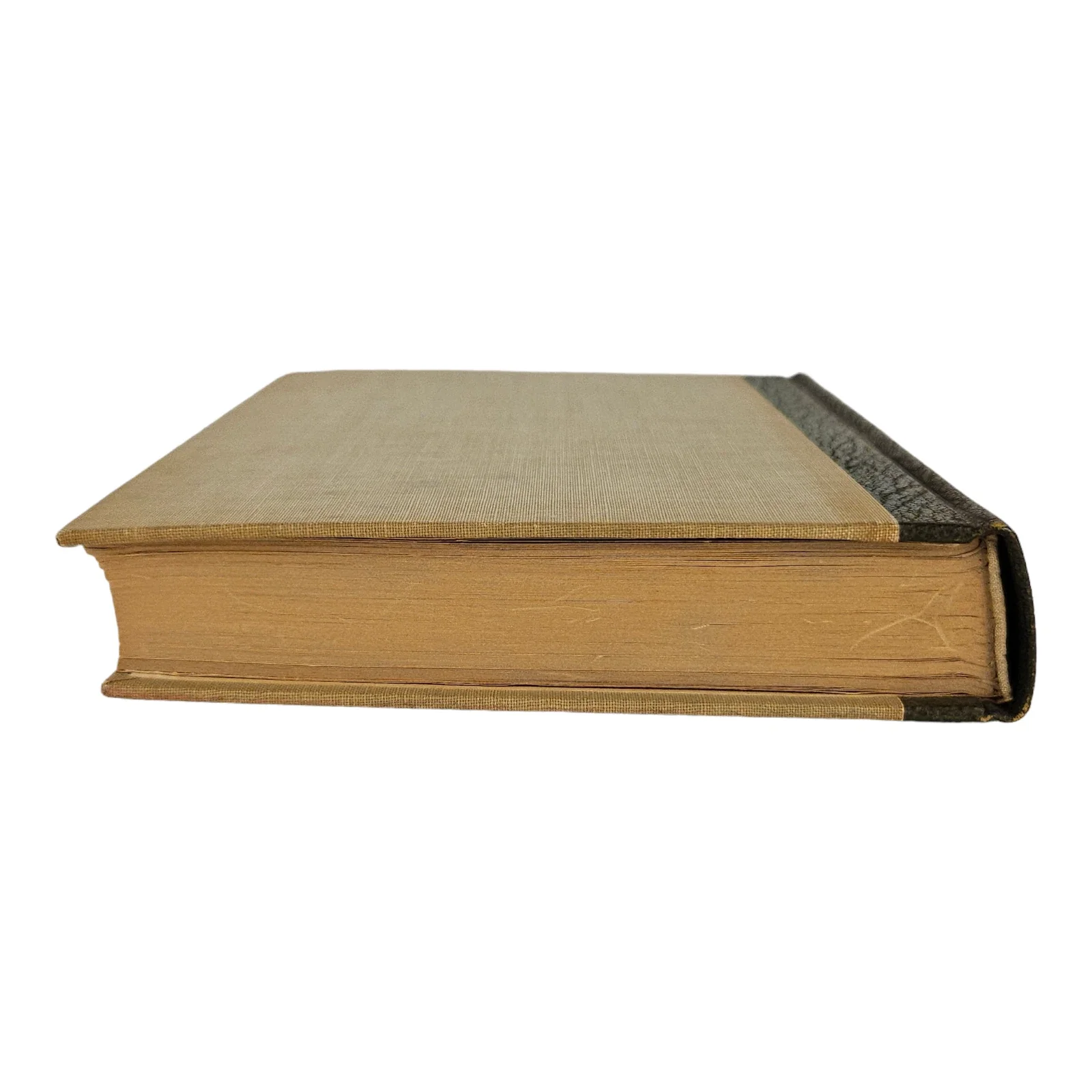 Image 9 of 18
 Image 10 of 18
 Image 11 of 18
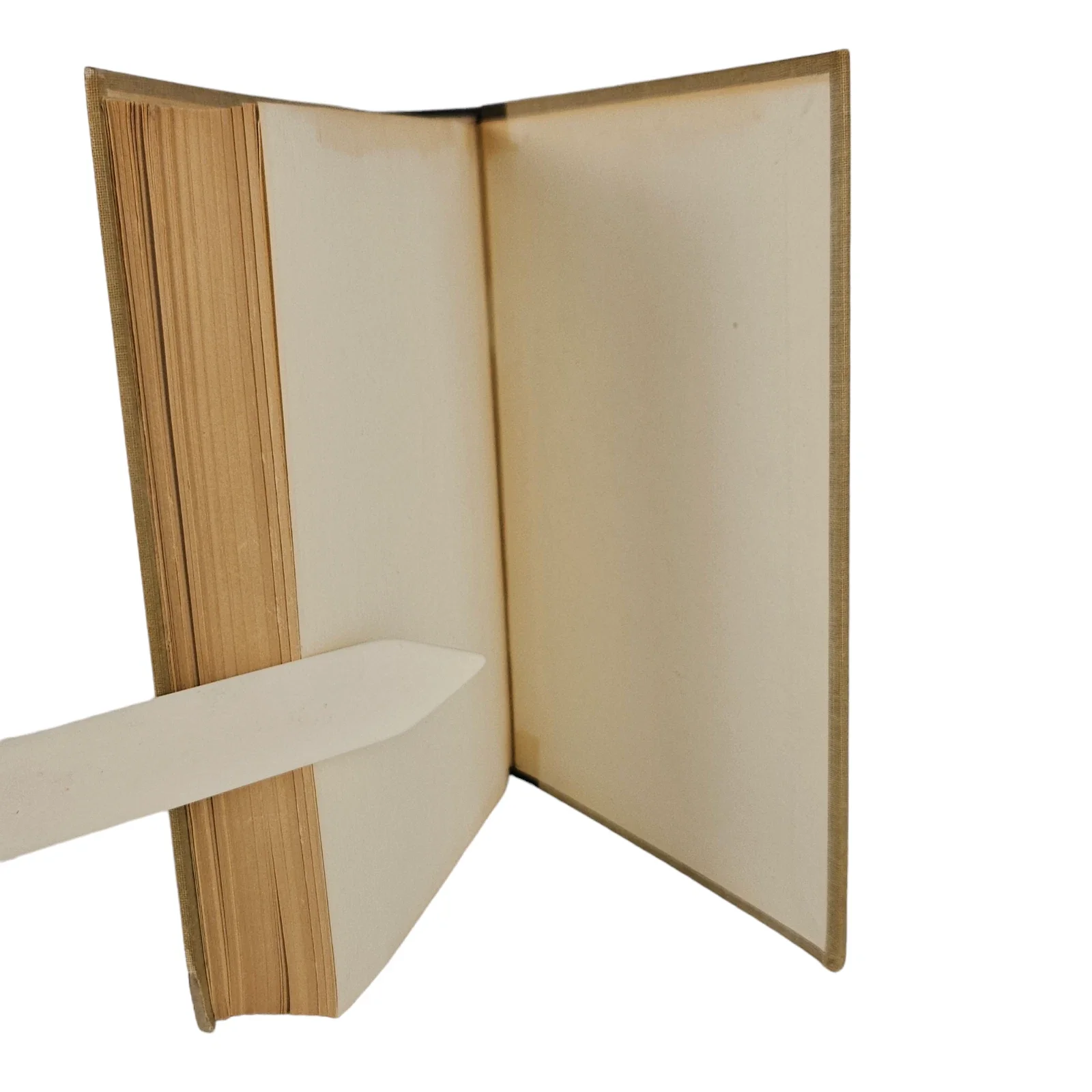 Image 12 of 18
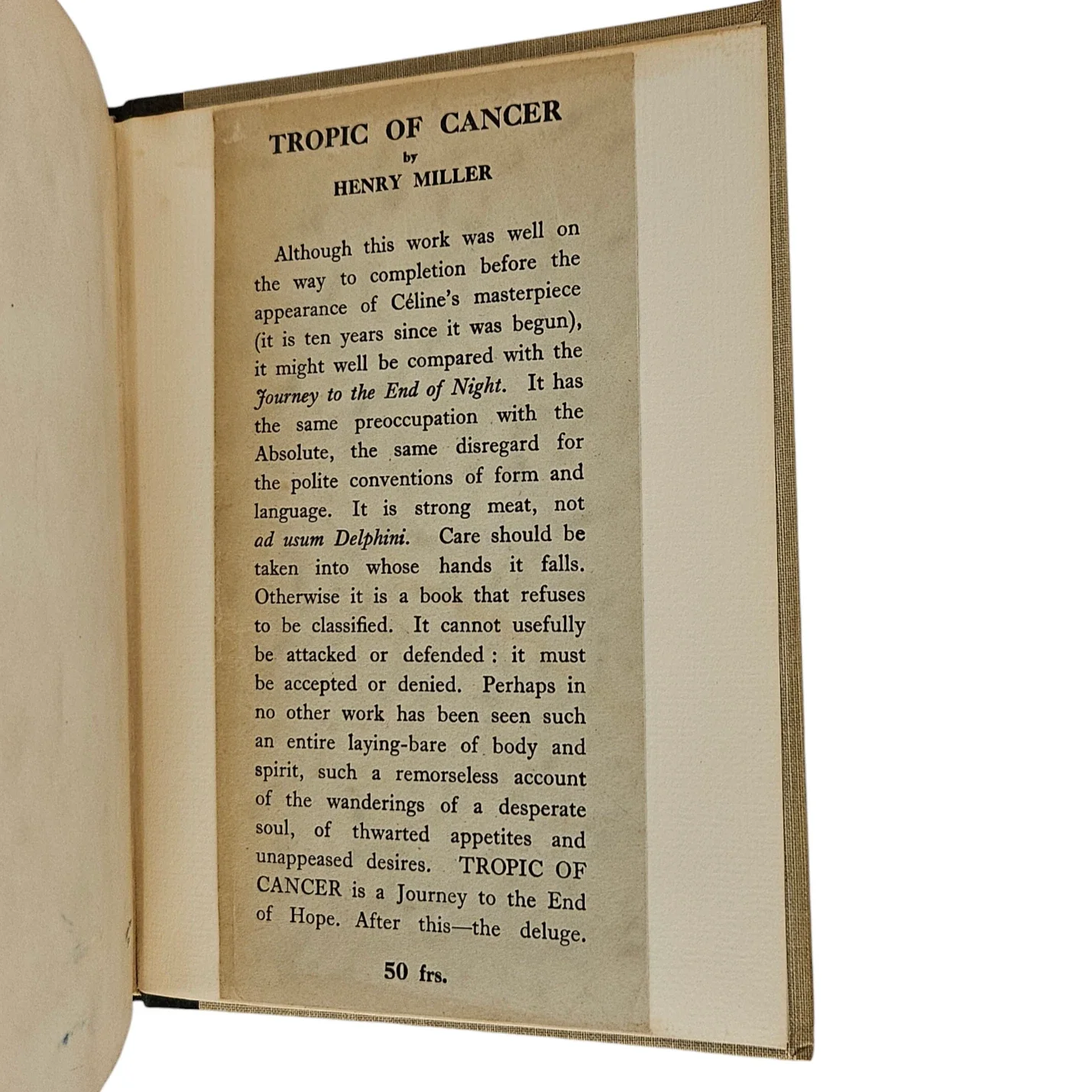 Image 13 of 18
 Image 14 of 18
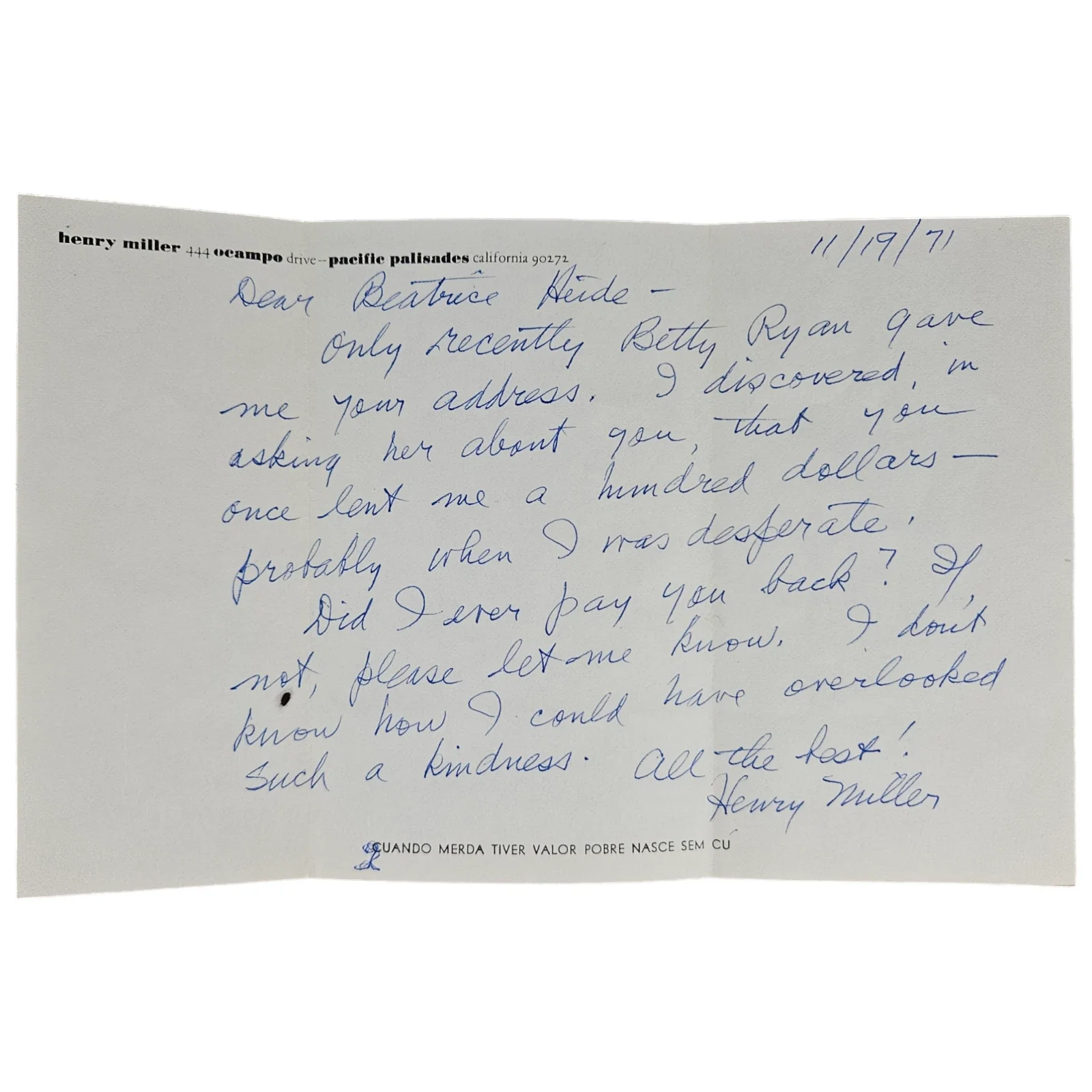 Image 15 of 18
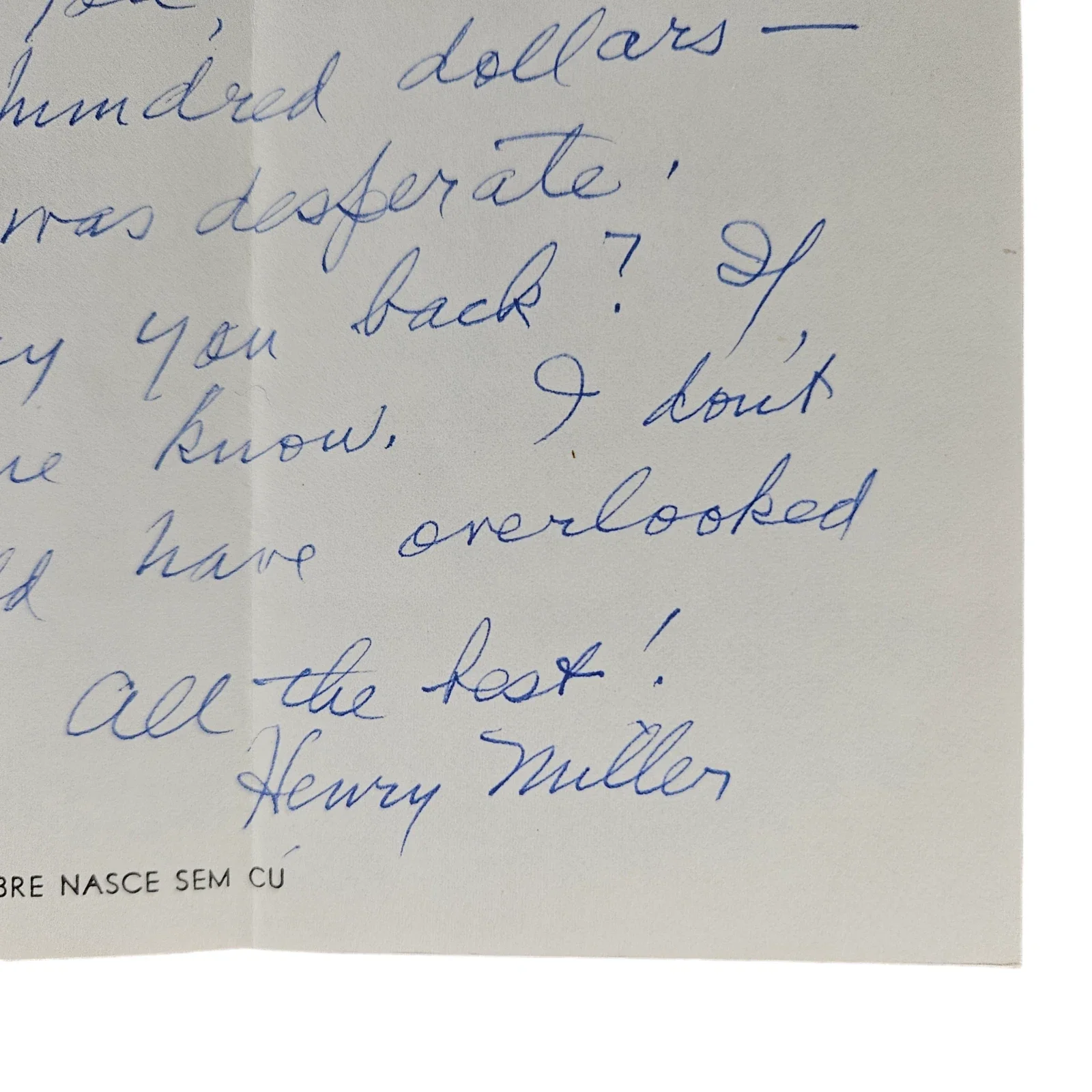 Image 16 of 18
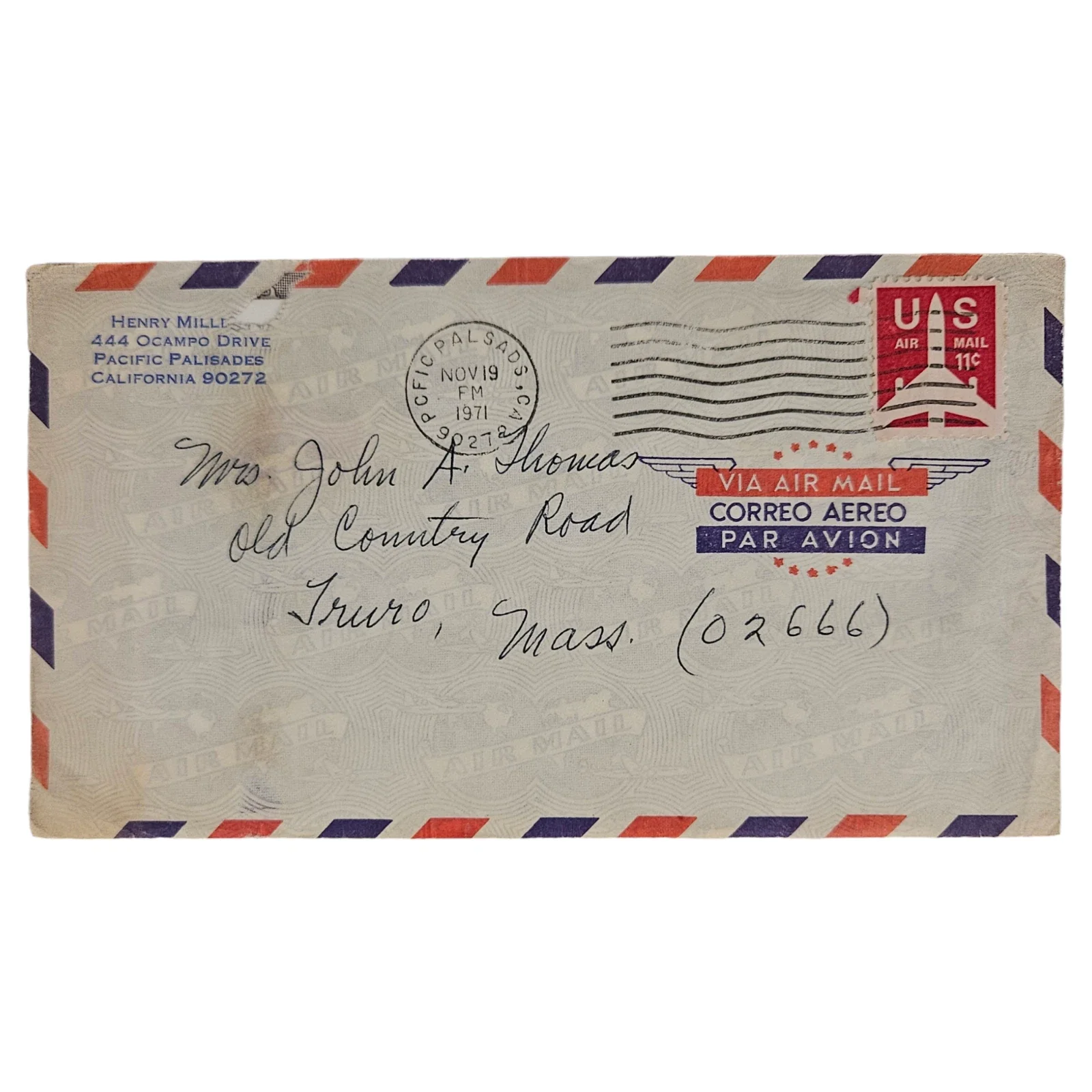 Image 17 of 18
 Image 18 of 18